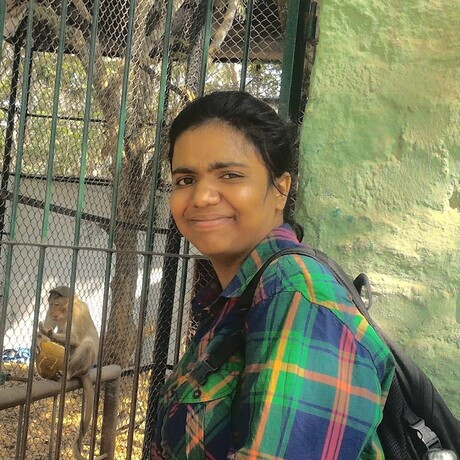
18 June. The day after the talk, I left the convention centre behind. It was my first time exploring this part of the city on my own. I started inland, at a museum, and ended by the sea.
The museum, before the street
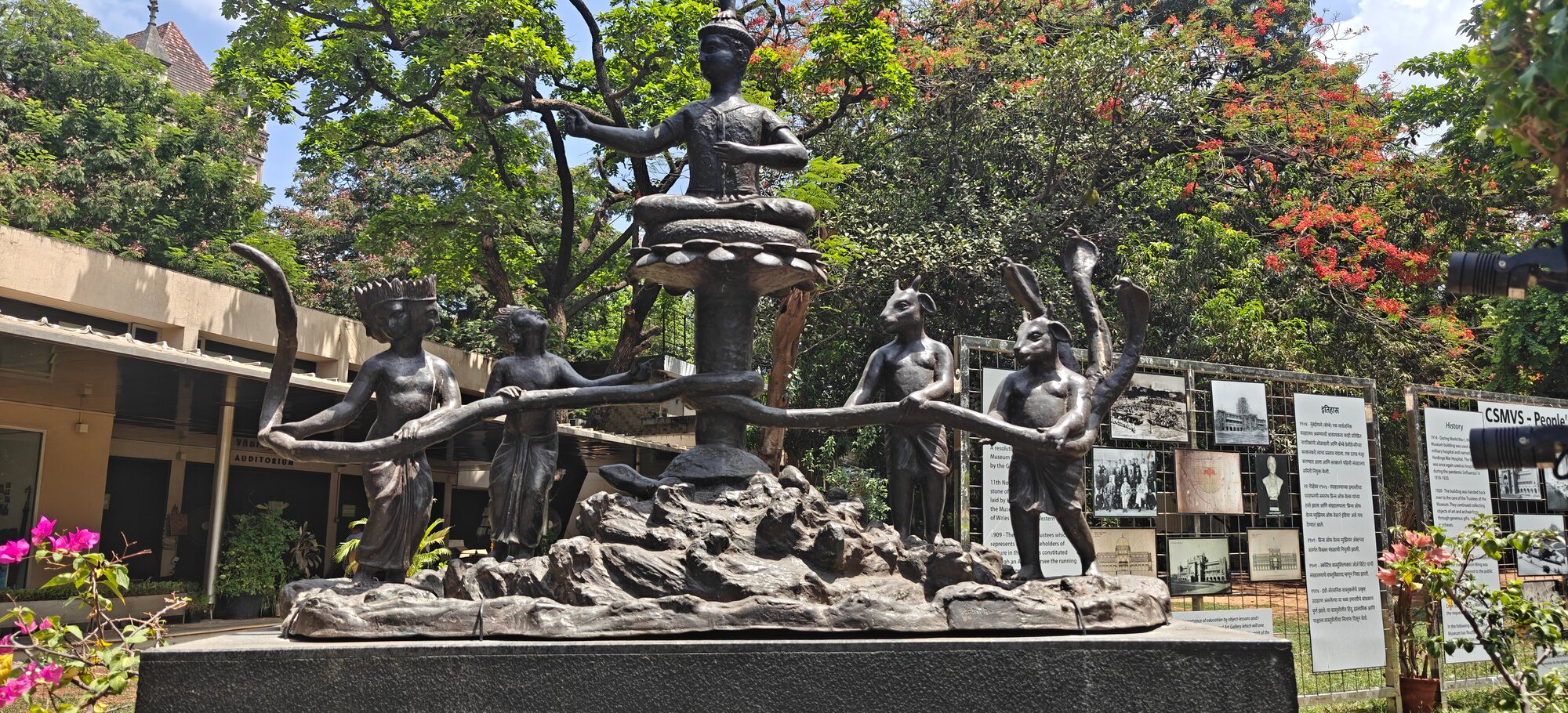
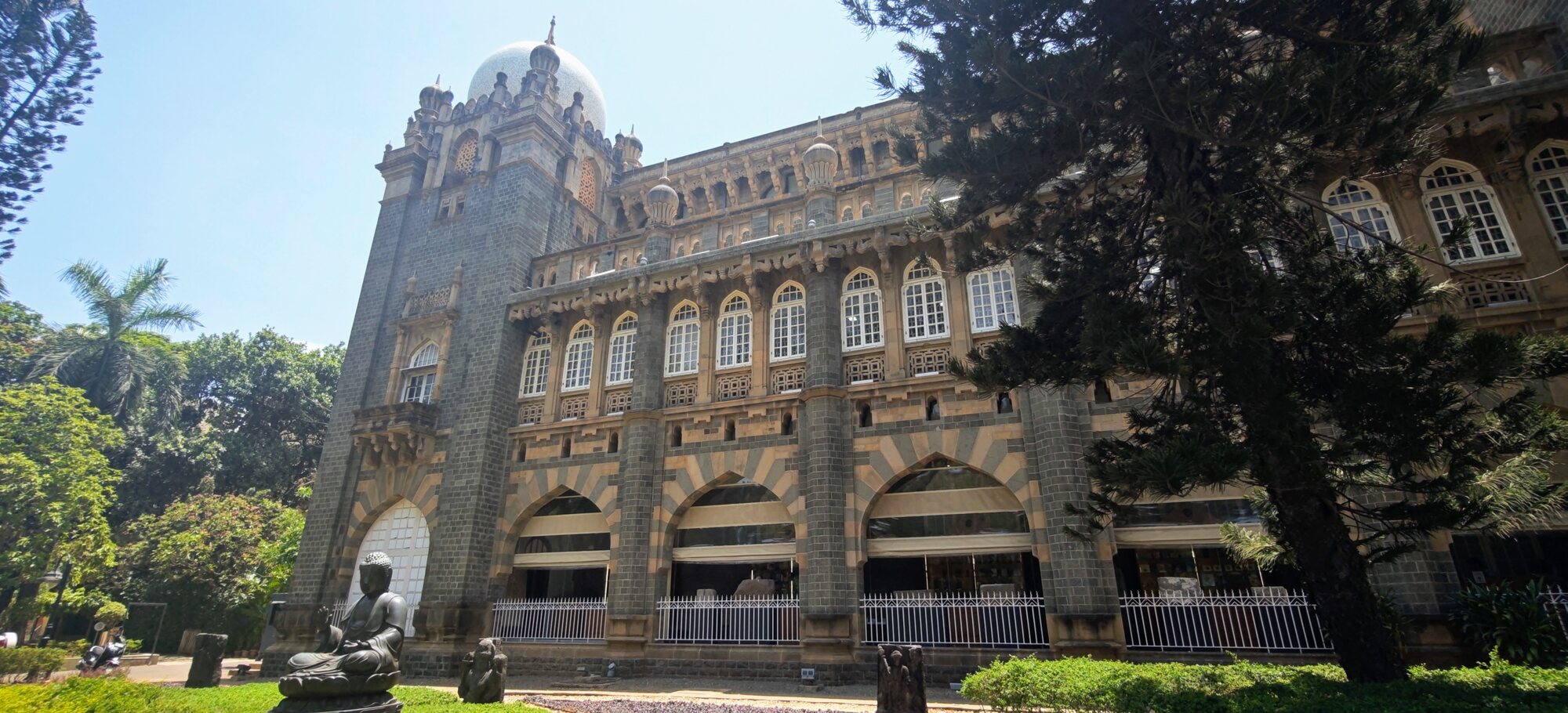
The museum first. Chhatrapati Shivaji Maharaj Vastu Sangrahalaya. People still call it the Prince of Wales Museum. I went through the garden before the galleries.
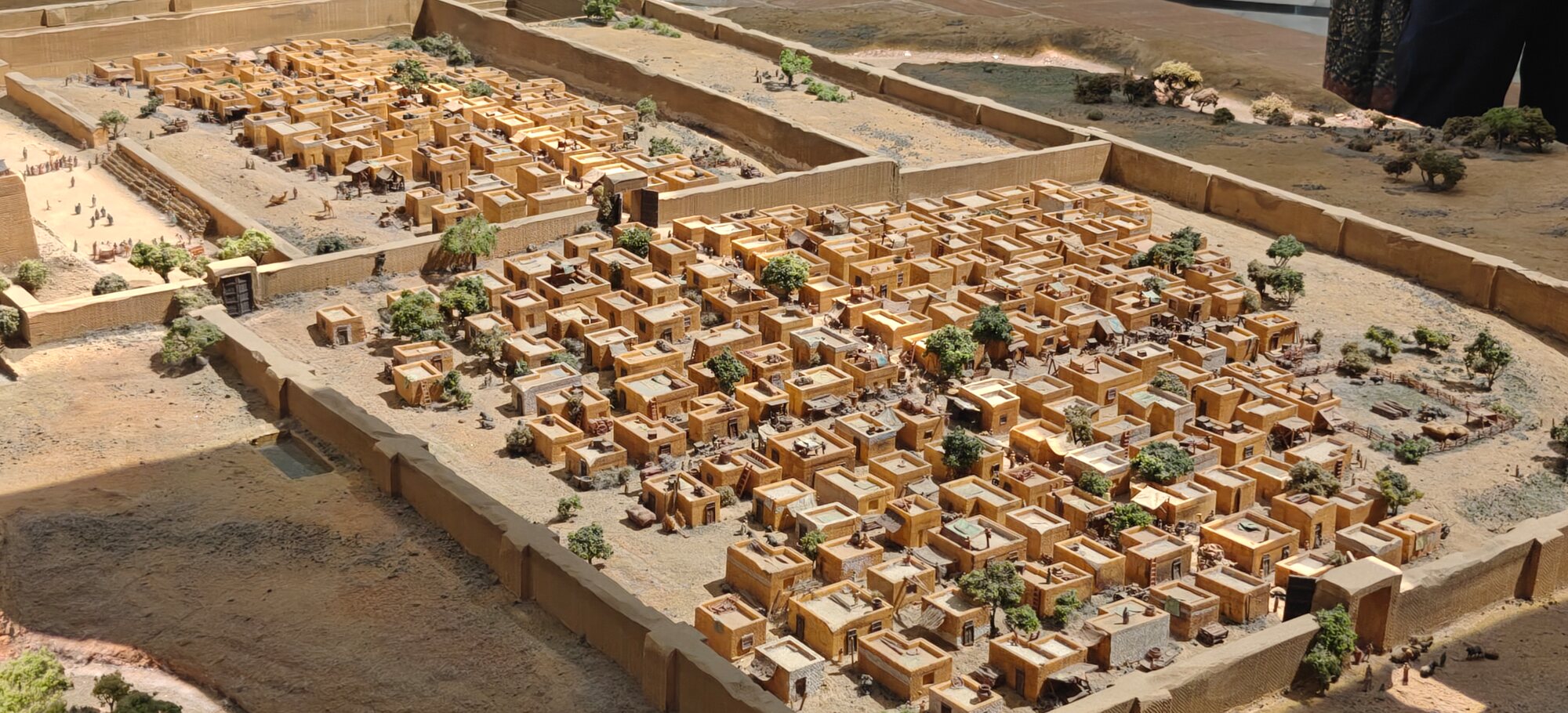
Inside, a model of a city from the Harappan civilization. Tiny walls, tiny houses. Easy to stand there longer than you mean to.
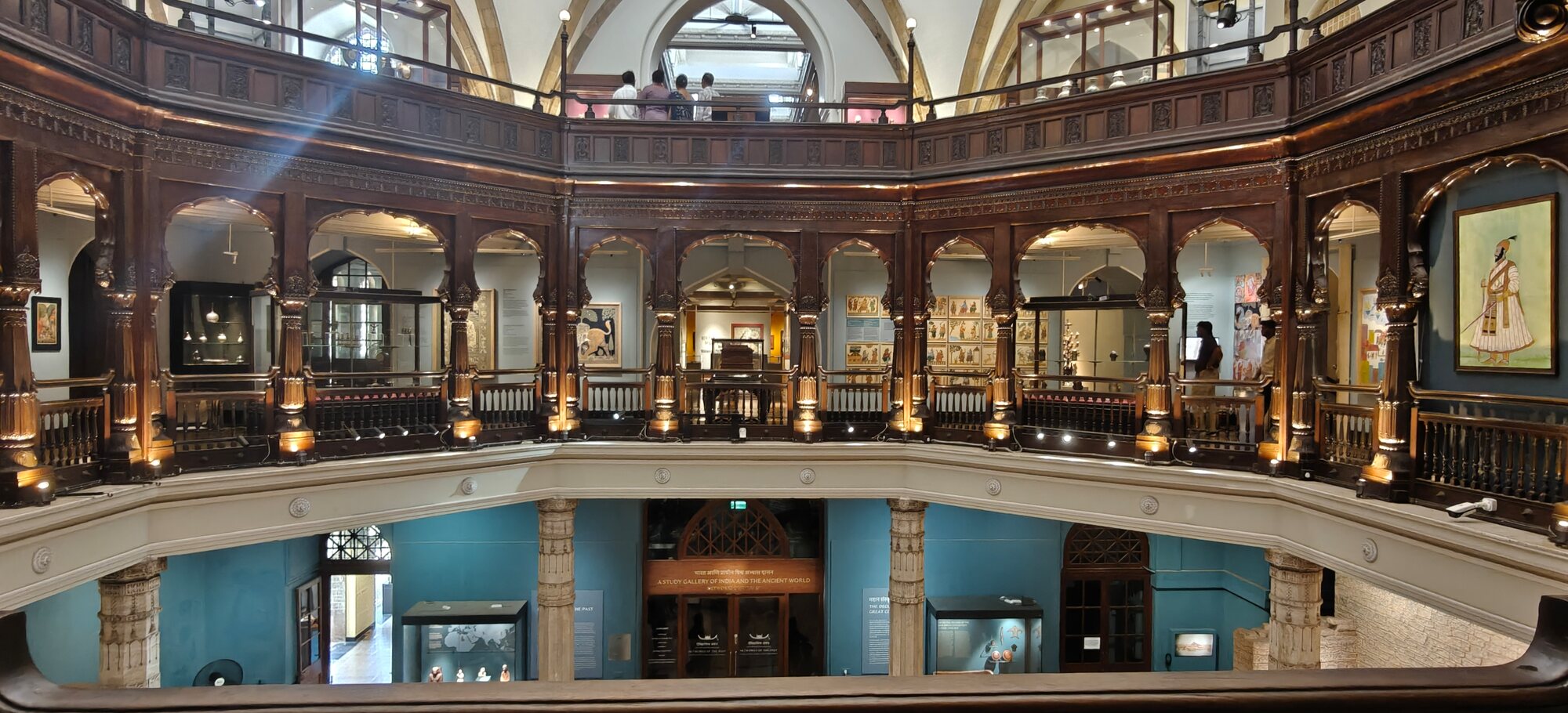
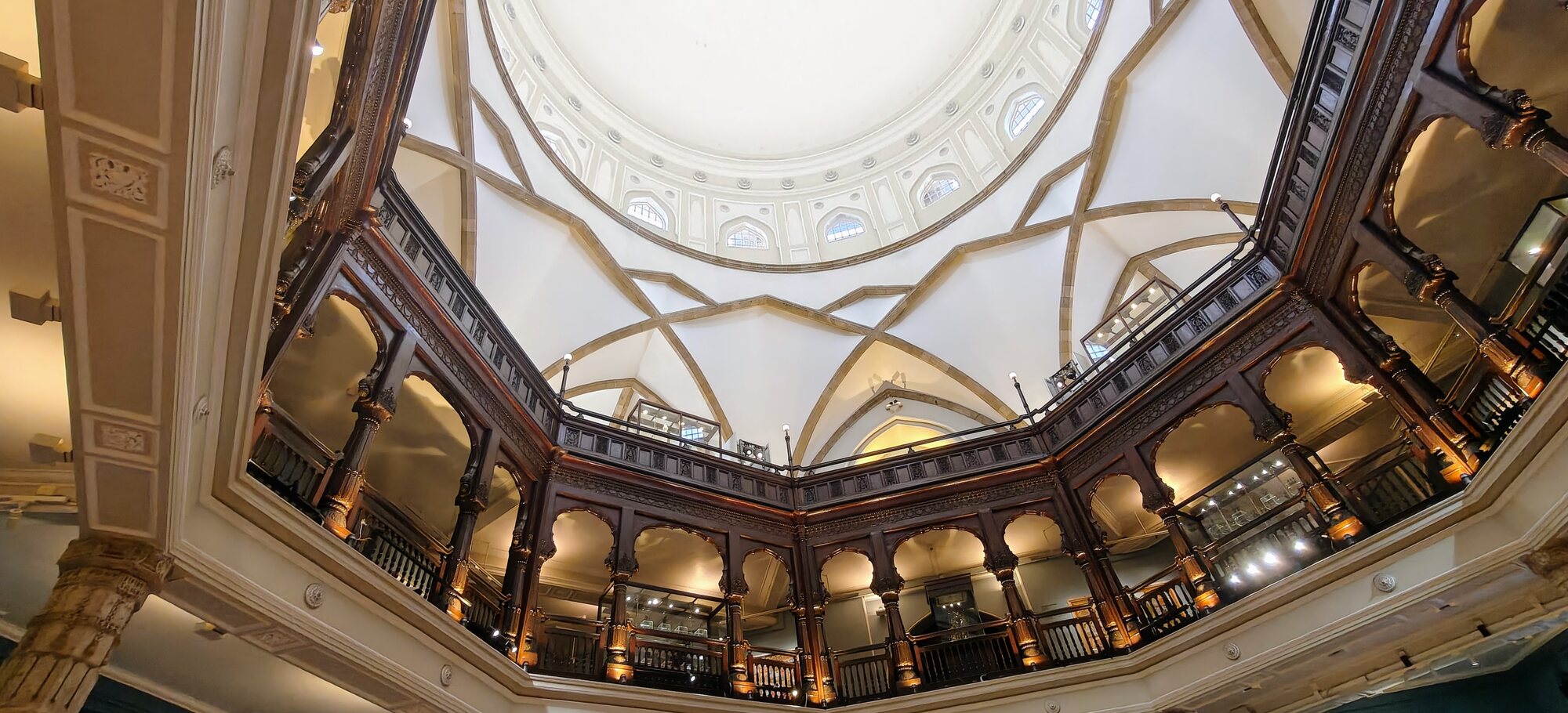
Then the hall. Balconies all the way around. Wood, and a skylight.
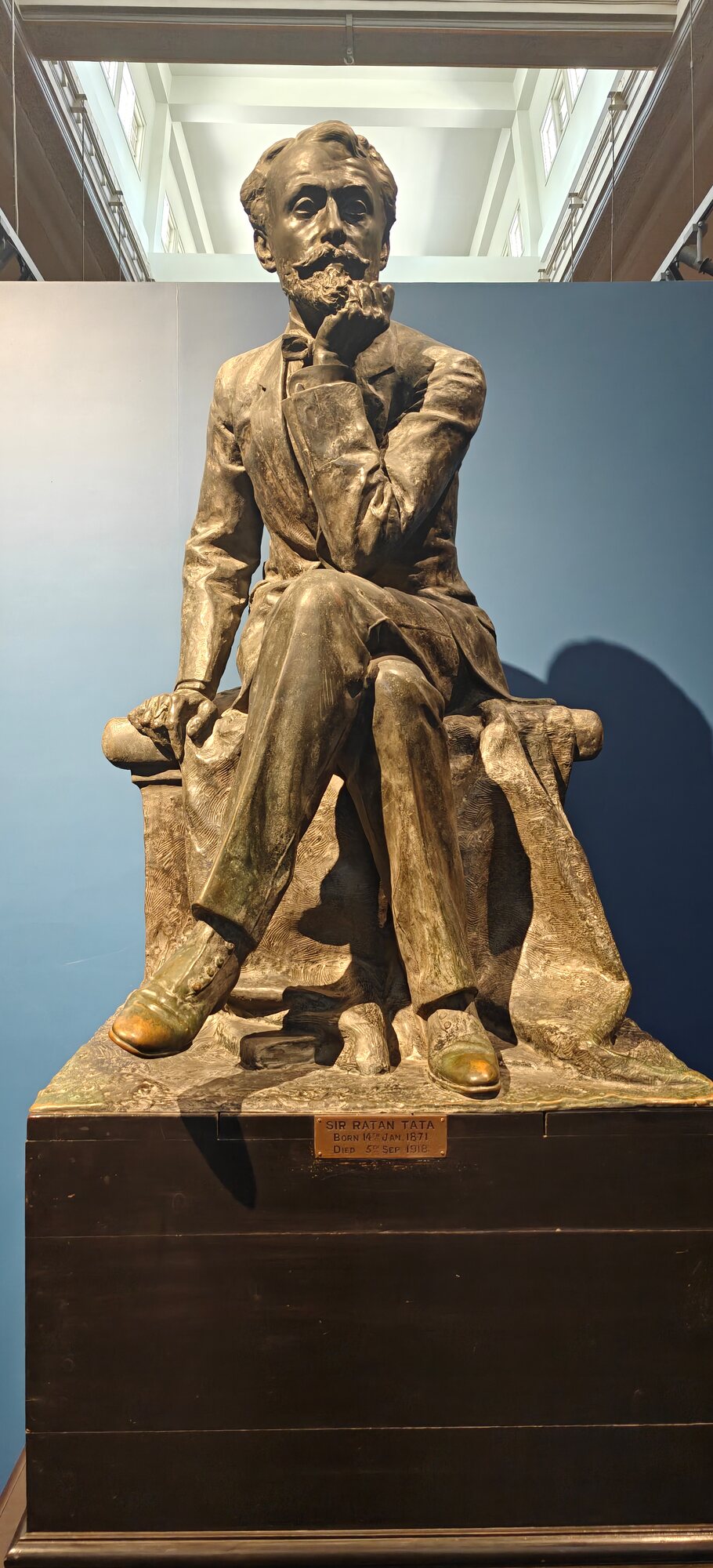
Sir Ratan Tata, on his own in the gallery.
The dome, from below. You have to tip your head all the way back.
Outside again. Yellow stone, palms, the dome against the sky.
The university, Horniman Circle, and the old streets
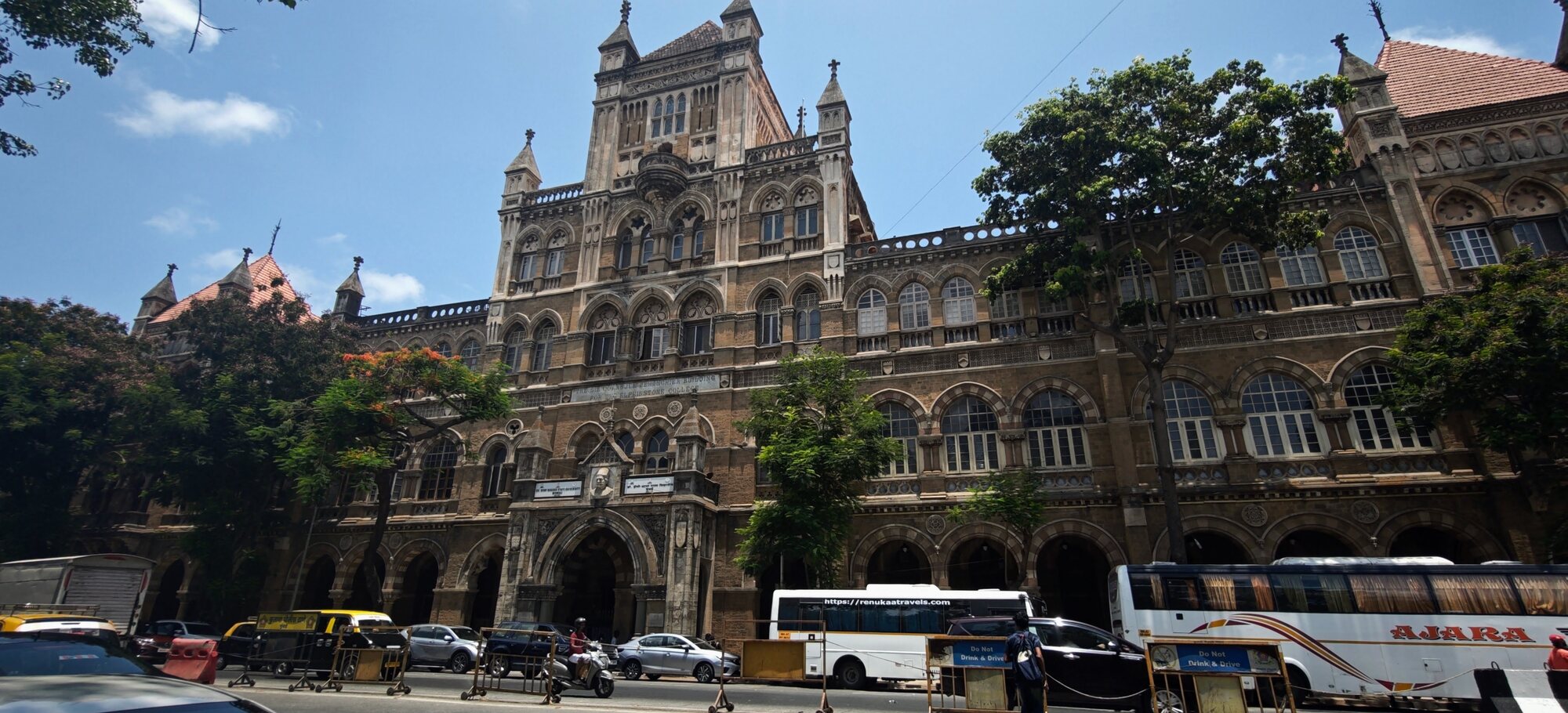
From there, Dr. Homi Bhabha State University. A long stone facade, arched windows, and traffic lined up in front.
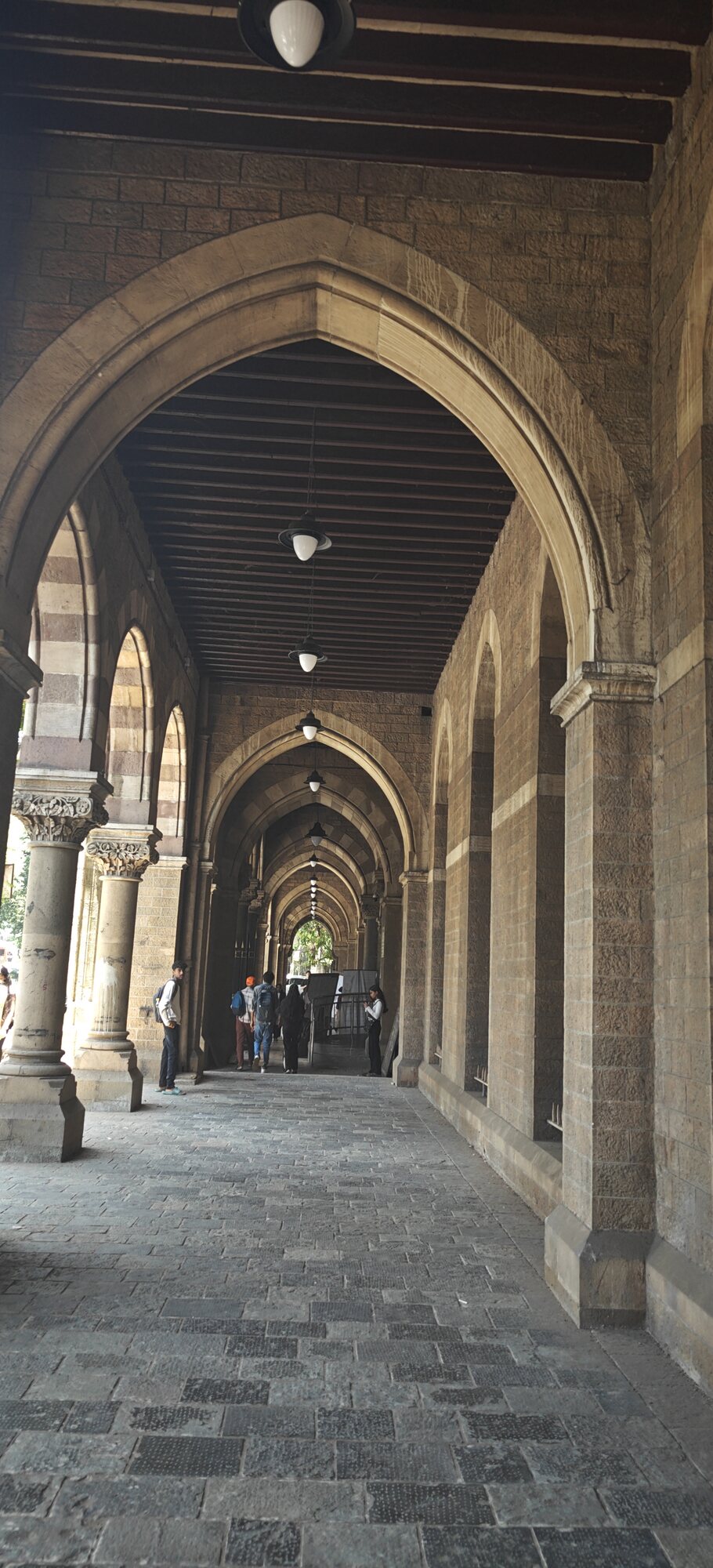
Off the street, an arcade. Arches, one after another, and people walking through.
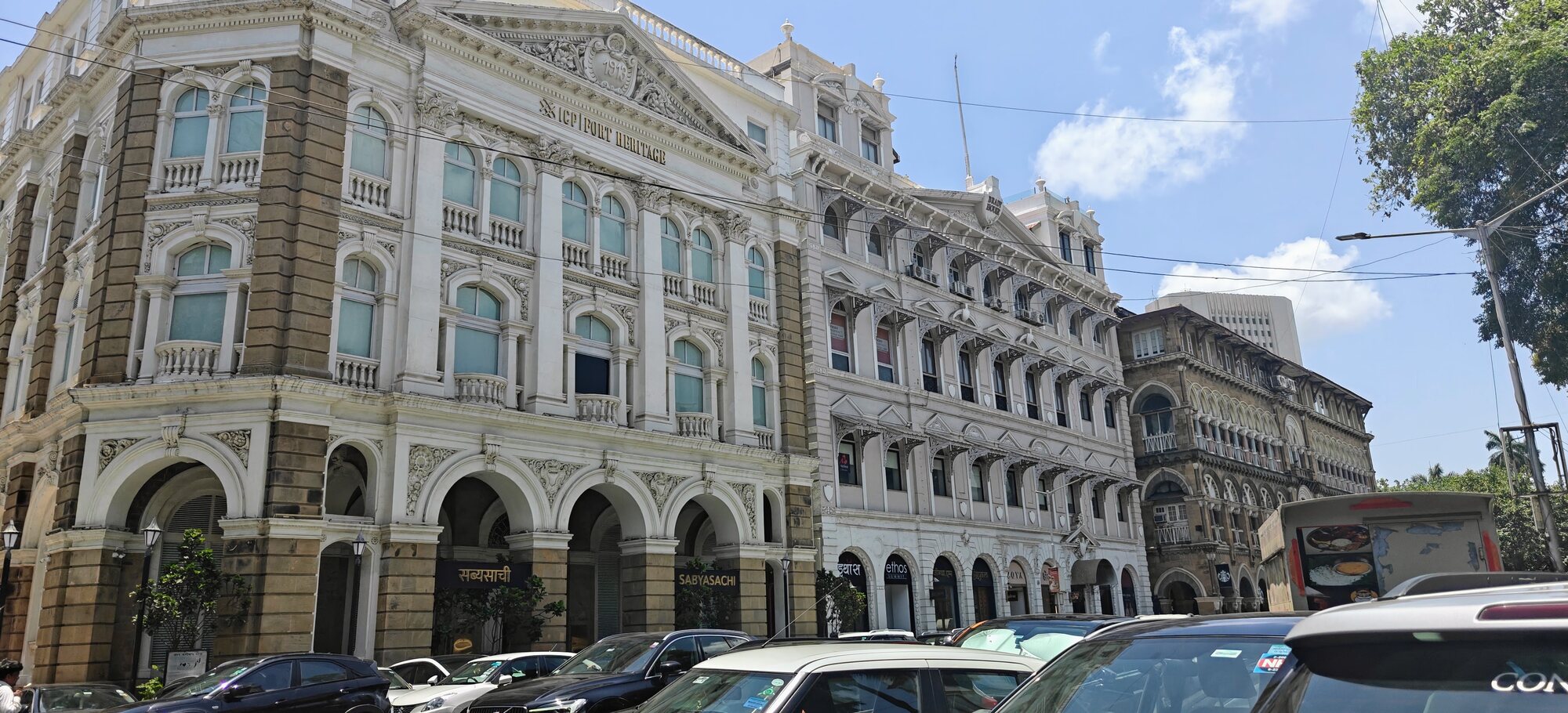
Then the old fronts, one after another. A curved one, with a lamp post in front.
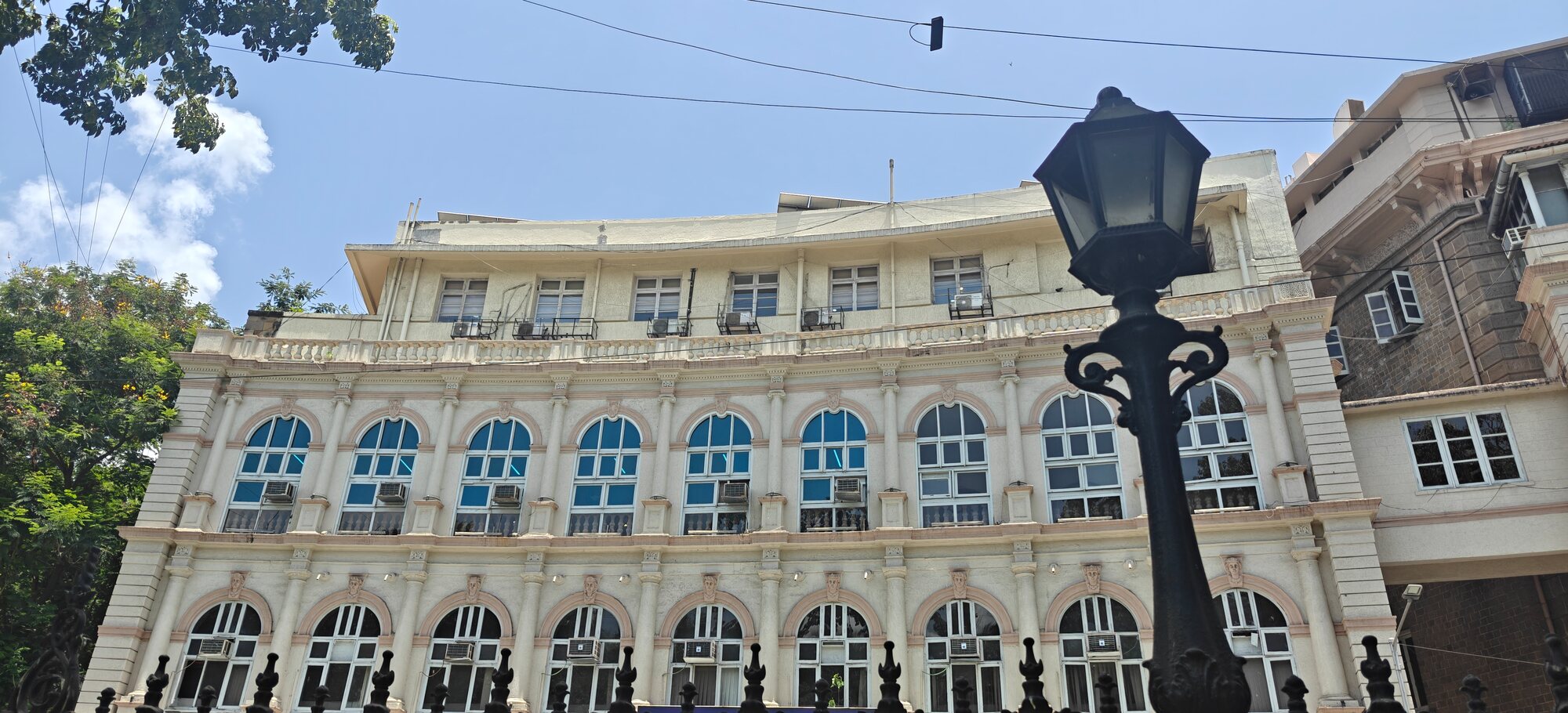
I kept walking through Fort, around Horniman Circle, and into the banking district. The old buildings sit one after another here too.
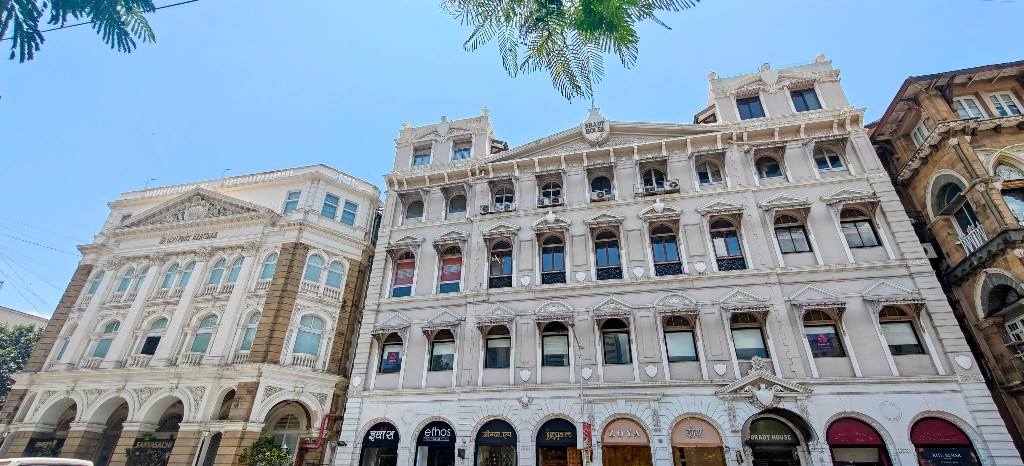
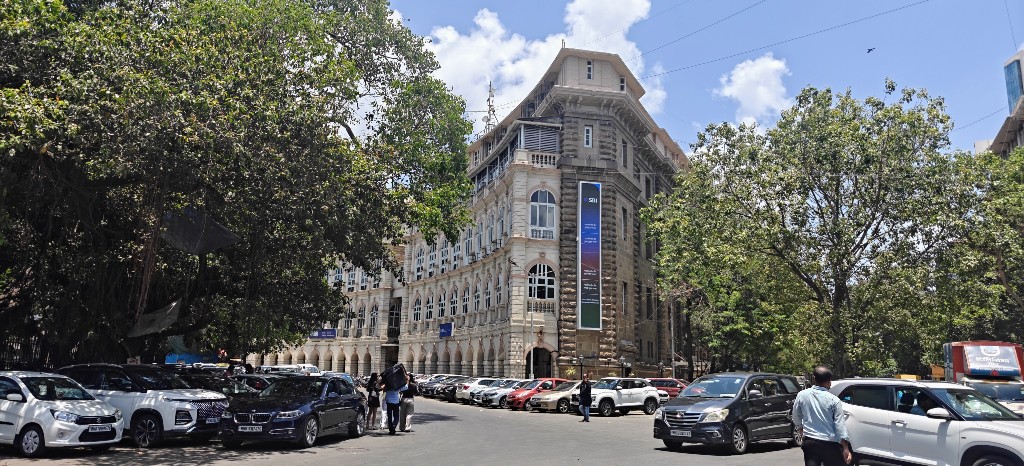
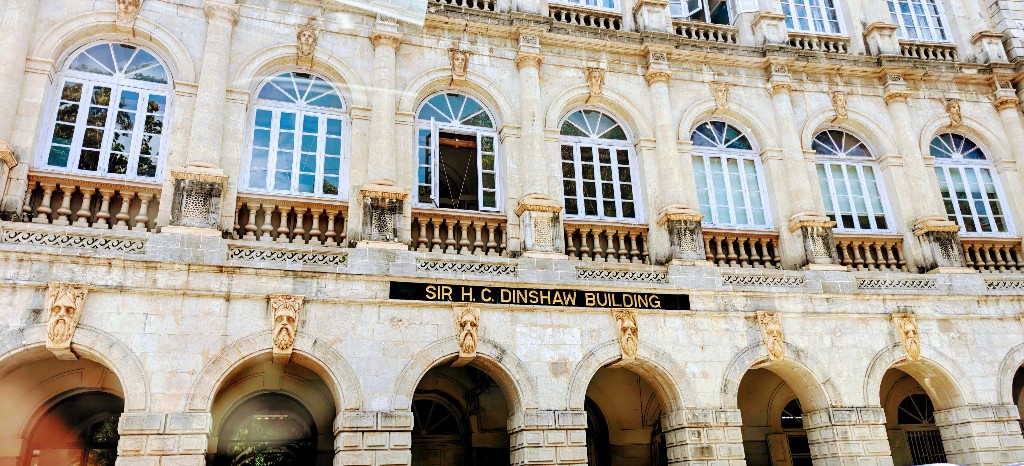
The SBI branch is inside the Sir H. C. Dinshaw Building. The name runs across the front, above a row of arches.
From there I walked past the Reserve Bank of India and onto Dalal Street, home of the Bombay Stock Exchange.
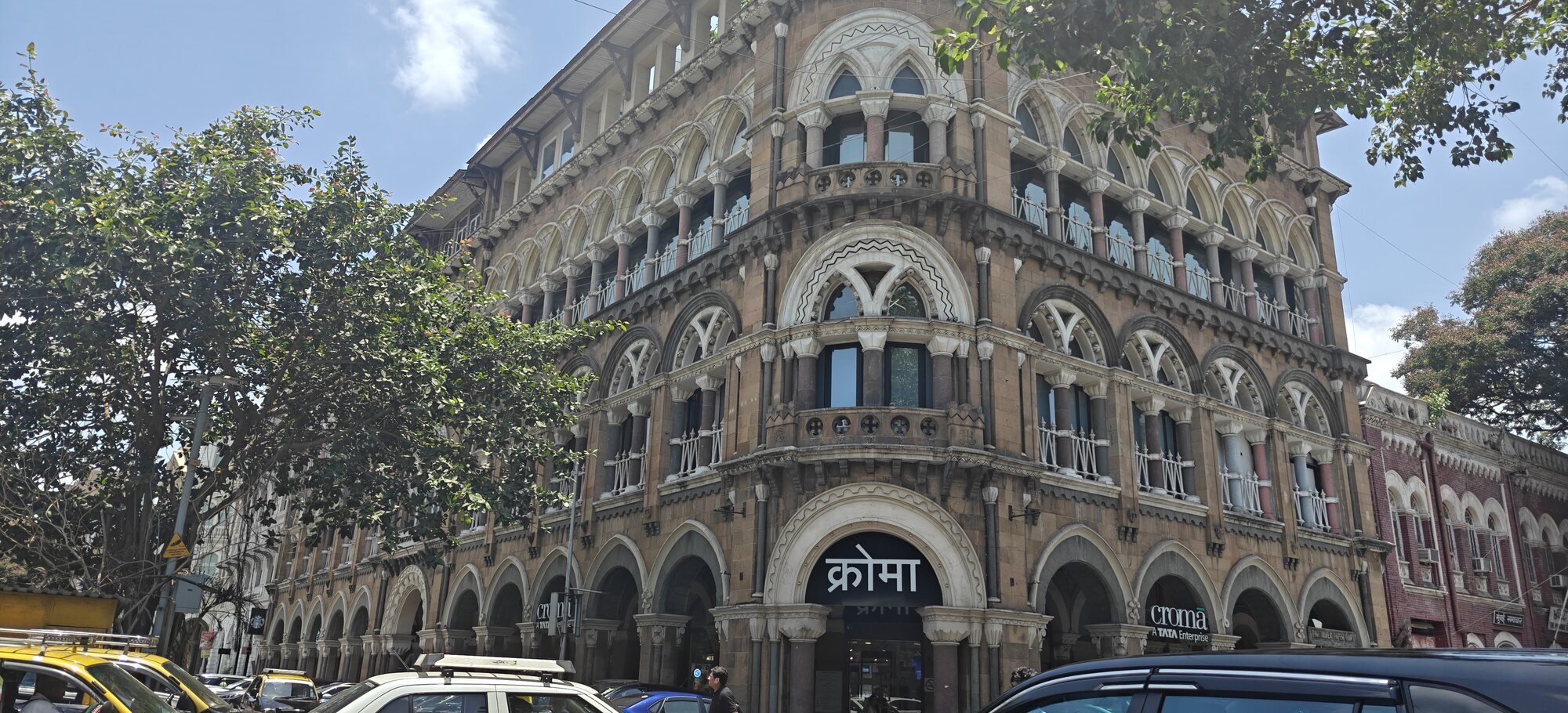
A corner, with another old shop sign.
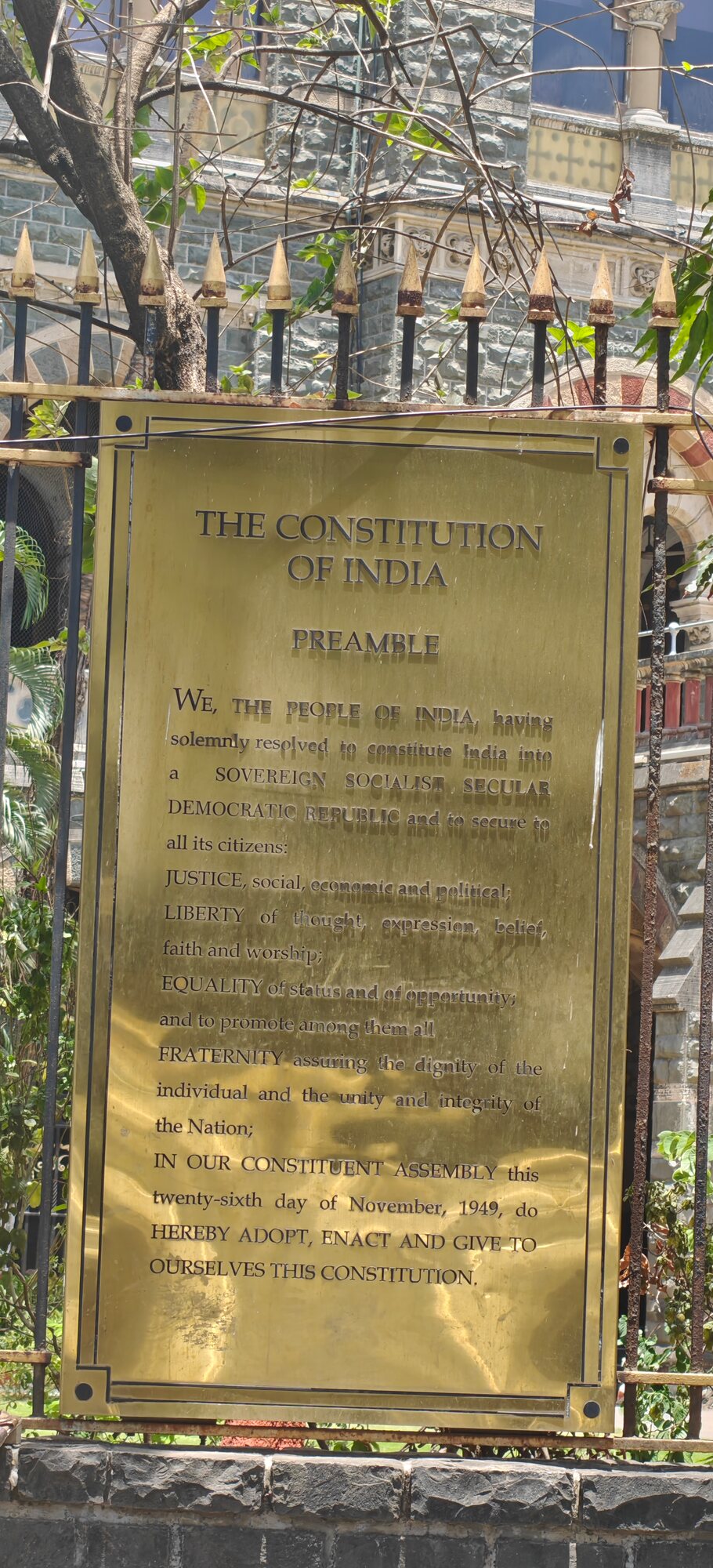
And then the Preamble, on brass, by a fence. We, the people of India.
The Gateway, the Taj, and the harbour
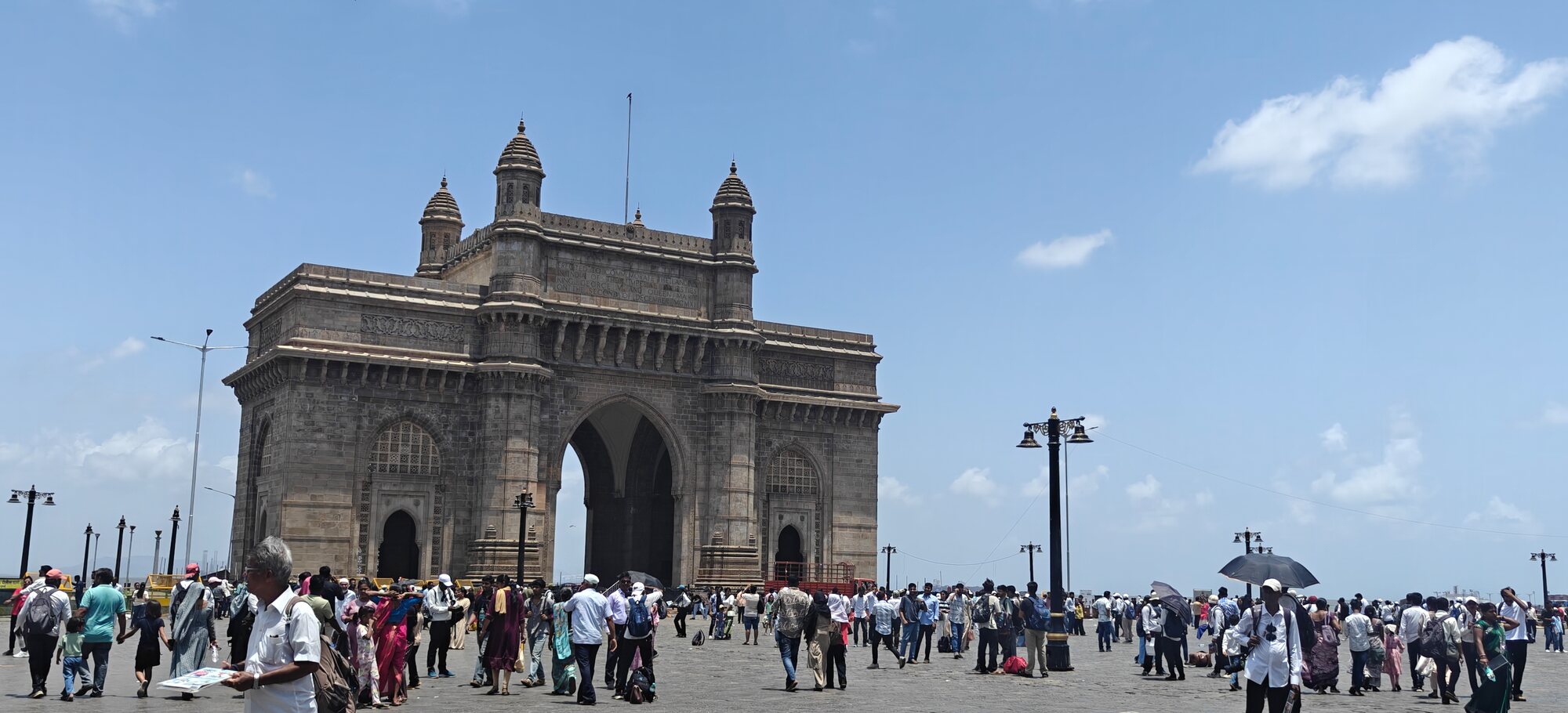
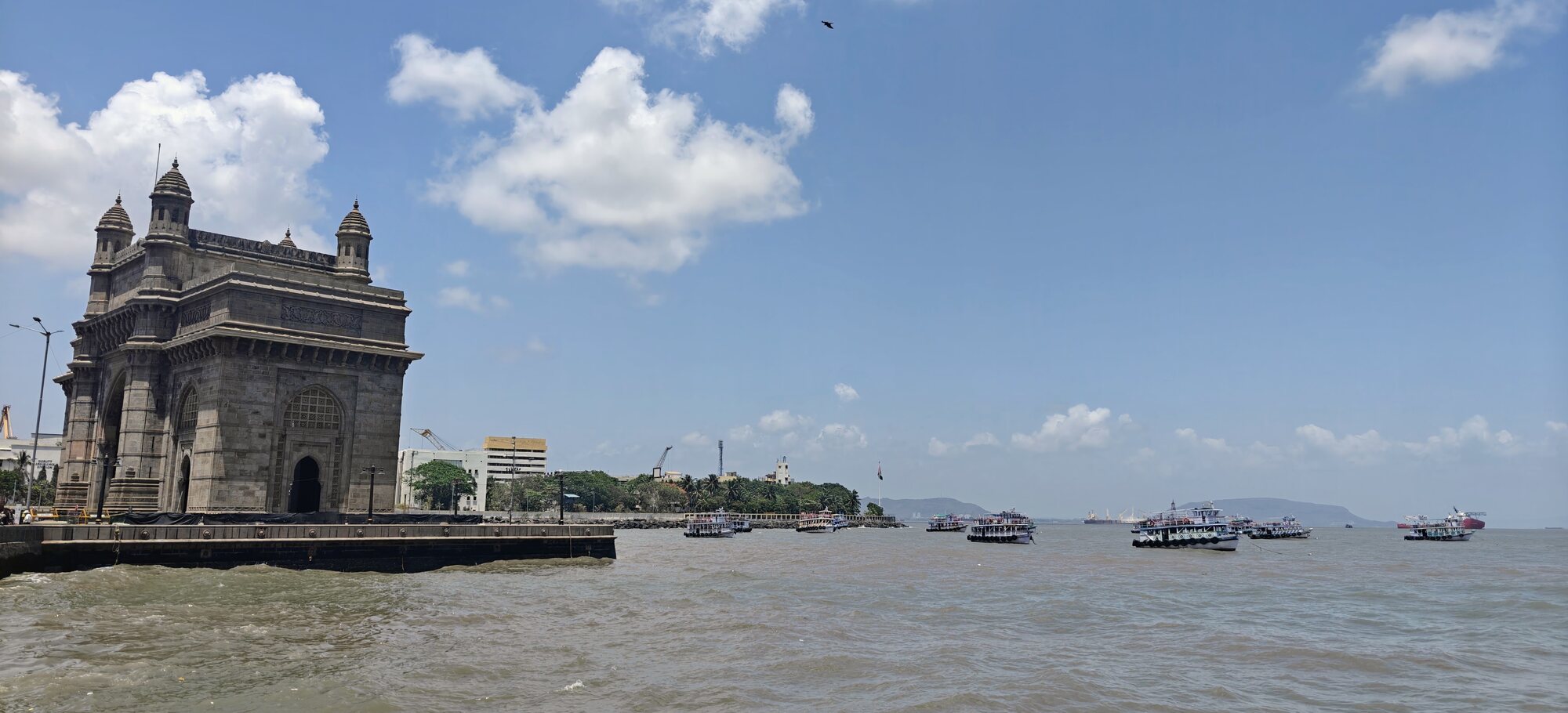
The Gateway of India. A crowd in front. The arch, and the sea behind it. This is the end of the walk, and the start of the water.
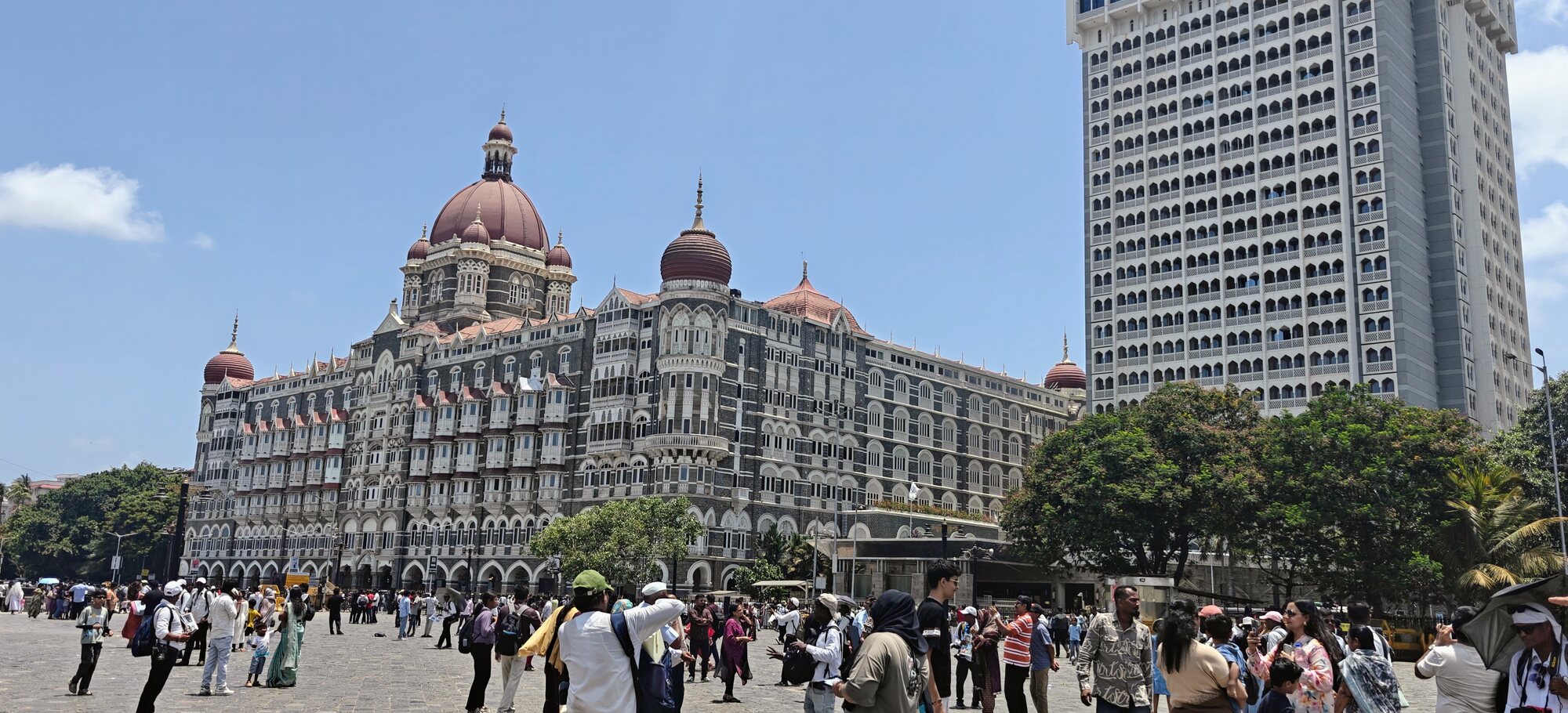
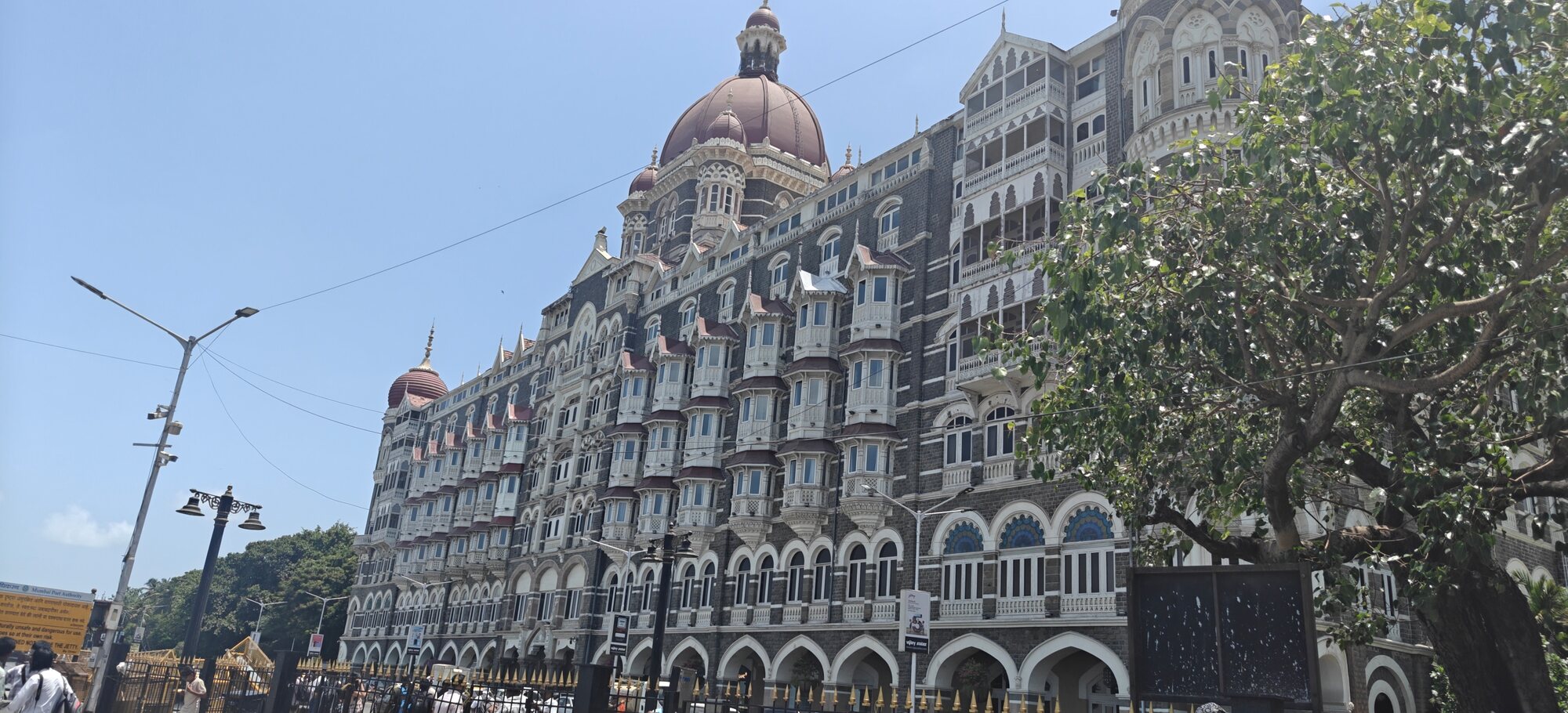
The Taj Mahal Palace is right beside it. The old hotel, and a glass tower next to it. The two of them don’t match, and that is the fun of it.
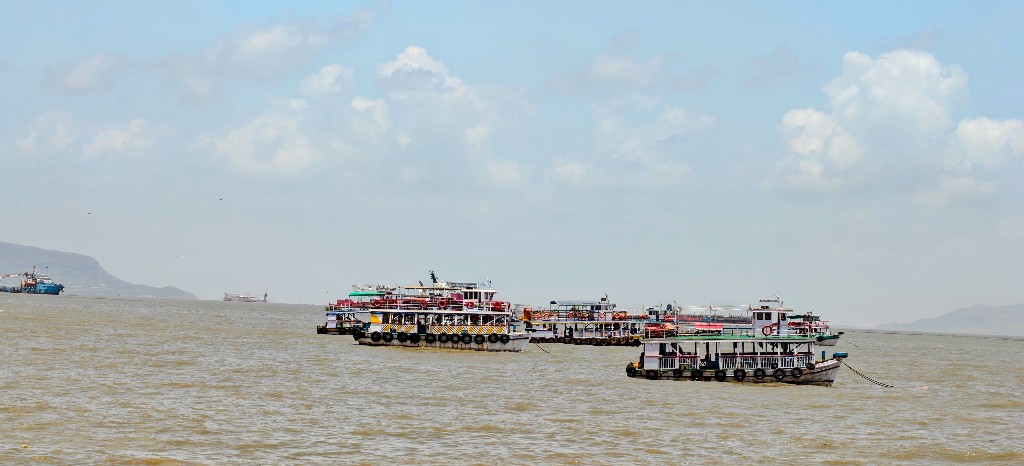
Boats on the harbour. Ferries, going back and forth.
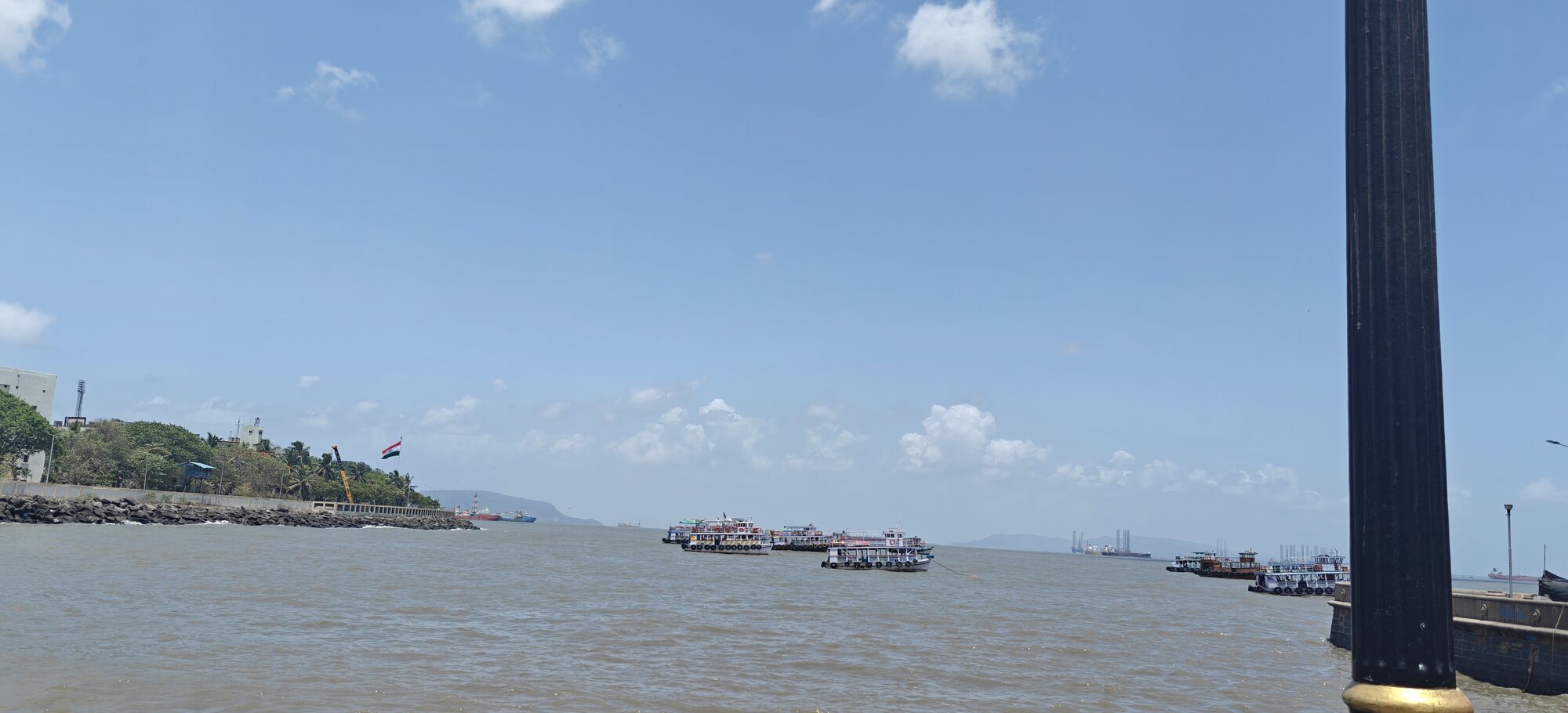
A line of them, waiting. Hills on the far side.
From the water side, the Gateway again, with the ferries going past.
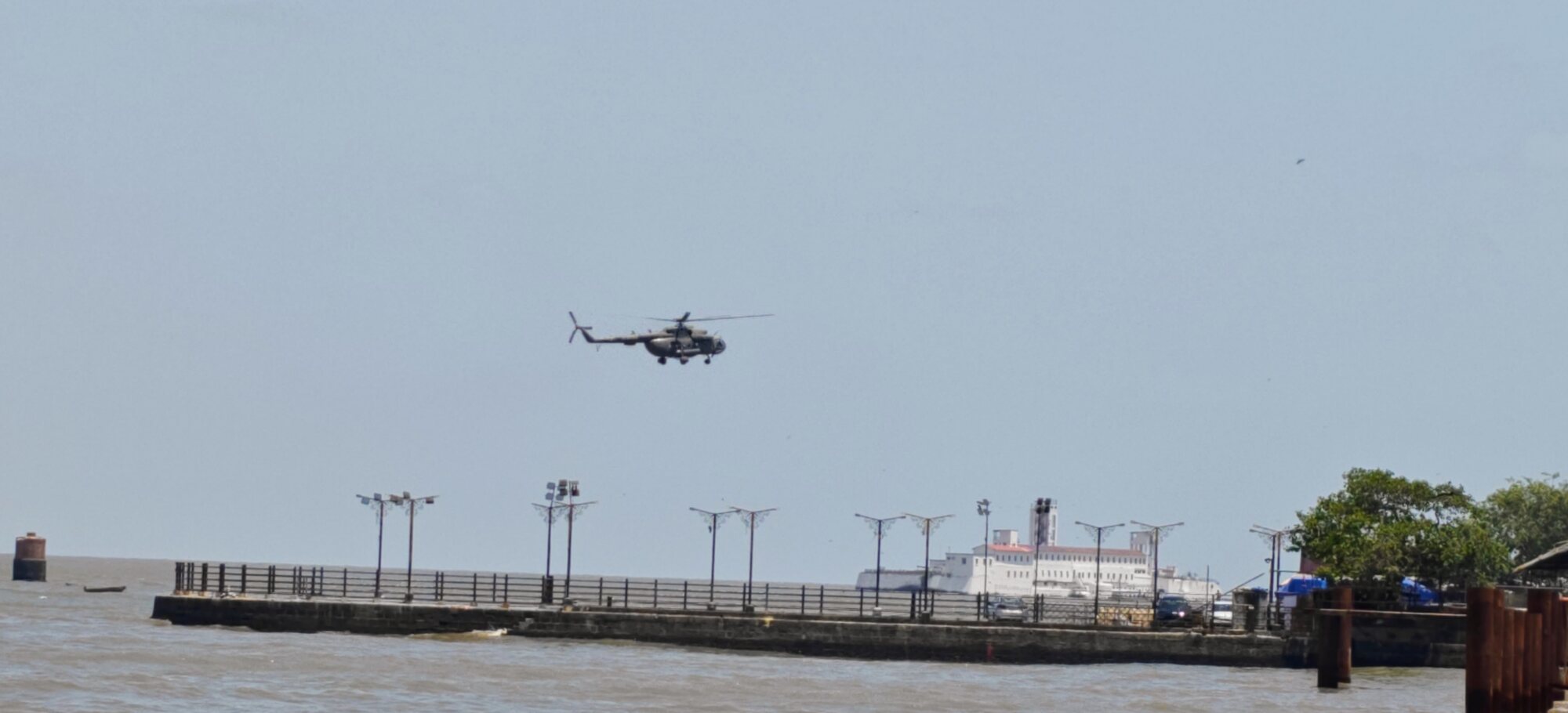
A helicopter, low over the water.
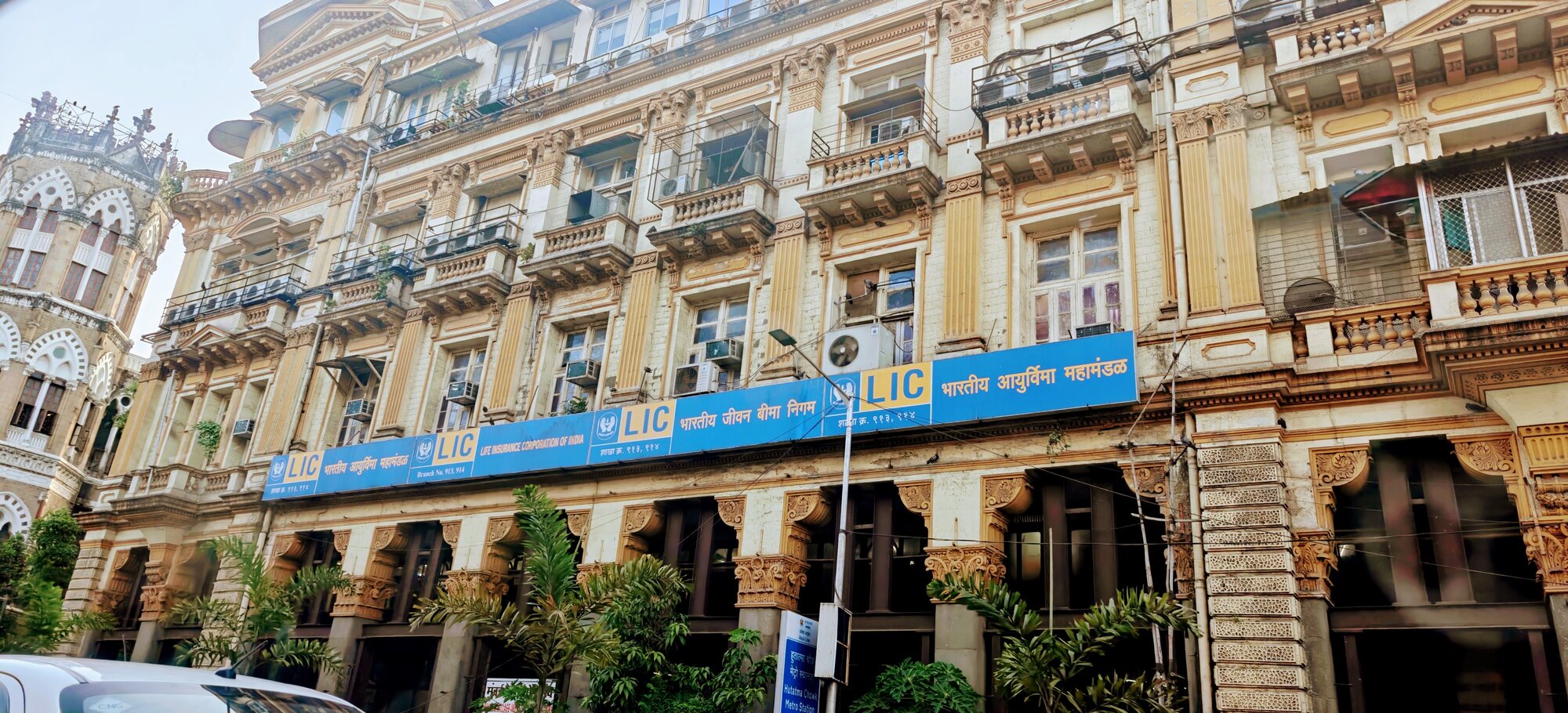
By evening, I was back on a street. Another old front. An LIC board along the ground floor. The day had gone from museum cases to university arches, old streets, the Gateway, and finally the harbour.
By evening, I was still passing old stone buildings. Bombay High Court was also part of the walk.
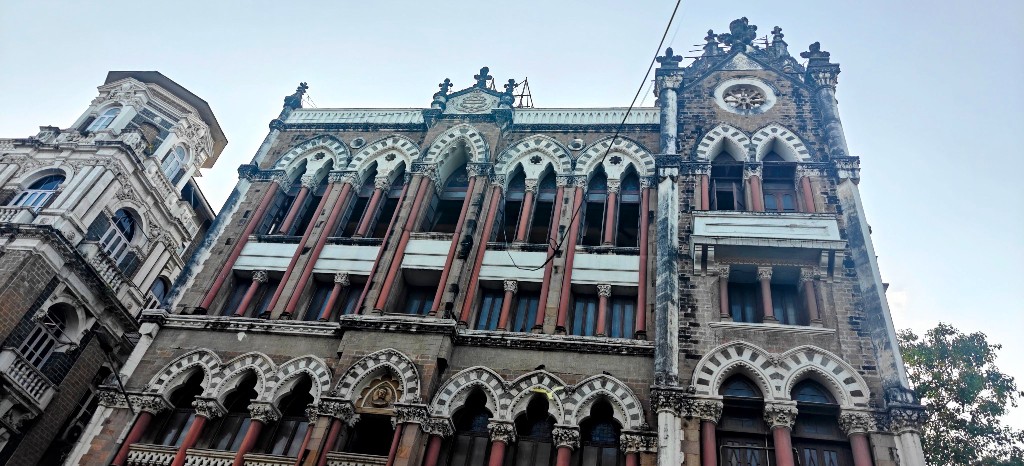
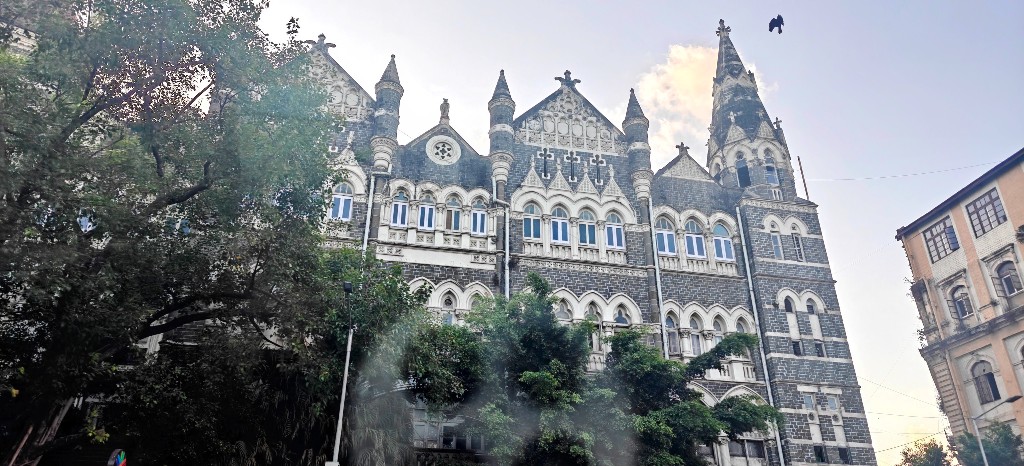
There was so much to take in during one solo day in South Mumbai. 
The next day, the city changed again. We went into the forest, climbed a basalt hill, and found a monastery cut into it. The next part is Kanheri Caves.