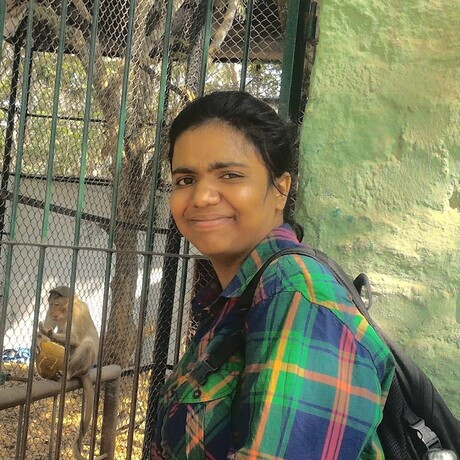
19 June. The day before, I had explored South Mumbai and ended at the harbour. Now we went the other way, into Sanjay Gandhi National Park. The streets gave way to forest, and a basalt hill rose ahead.
The board at the bottom of the steps says Kanheri. The caves here run from the 1st century BCE to about the 10th century. The sculptures came later, with most of the Buddhas from the 5th and 6th centuries. Monks lived here across all of that time. Modern Mumbai is still just past the trees.
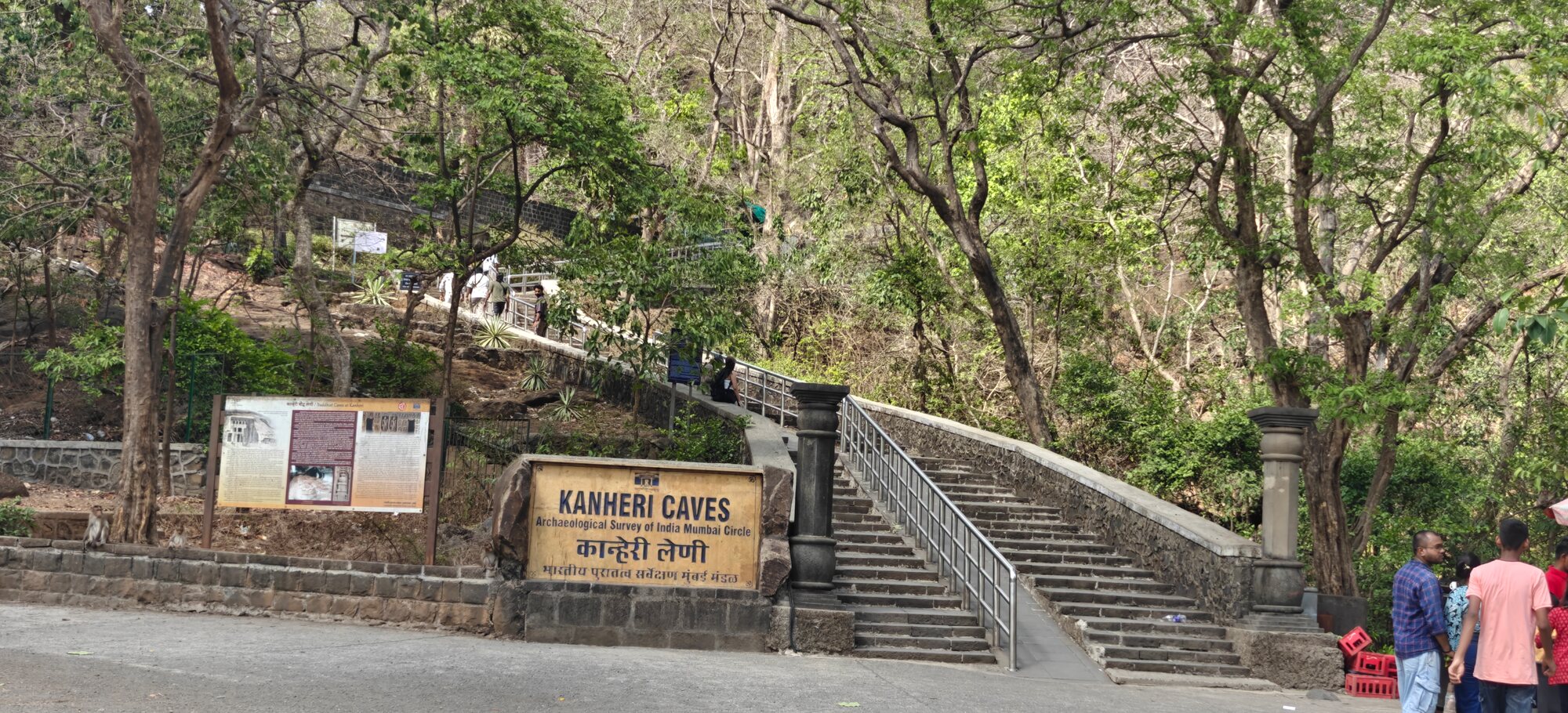
Up the hill, caves cut into the rock
The path climbs. At first the caves look like dark openings in the hill. Then the doorways, pillars, stupas, and figures begin to appear - all cut from the same rock.
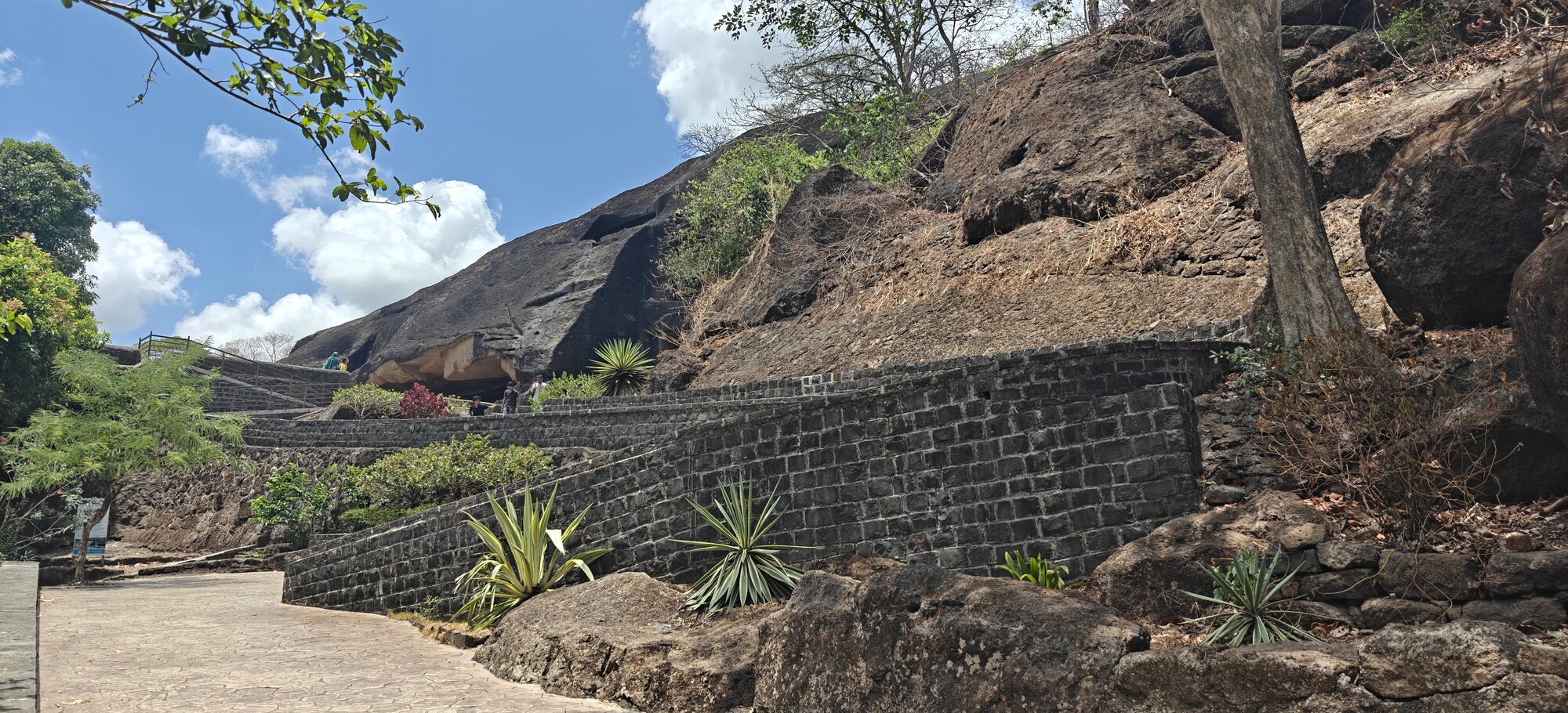
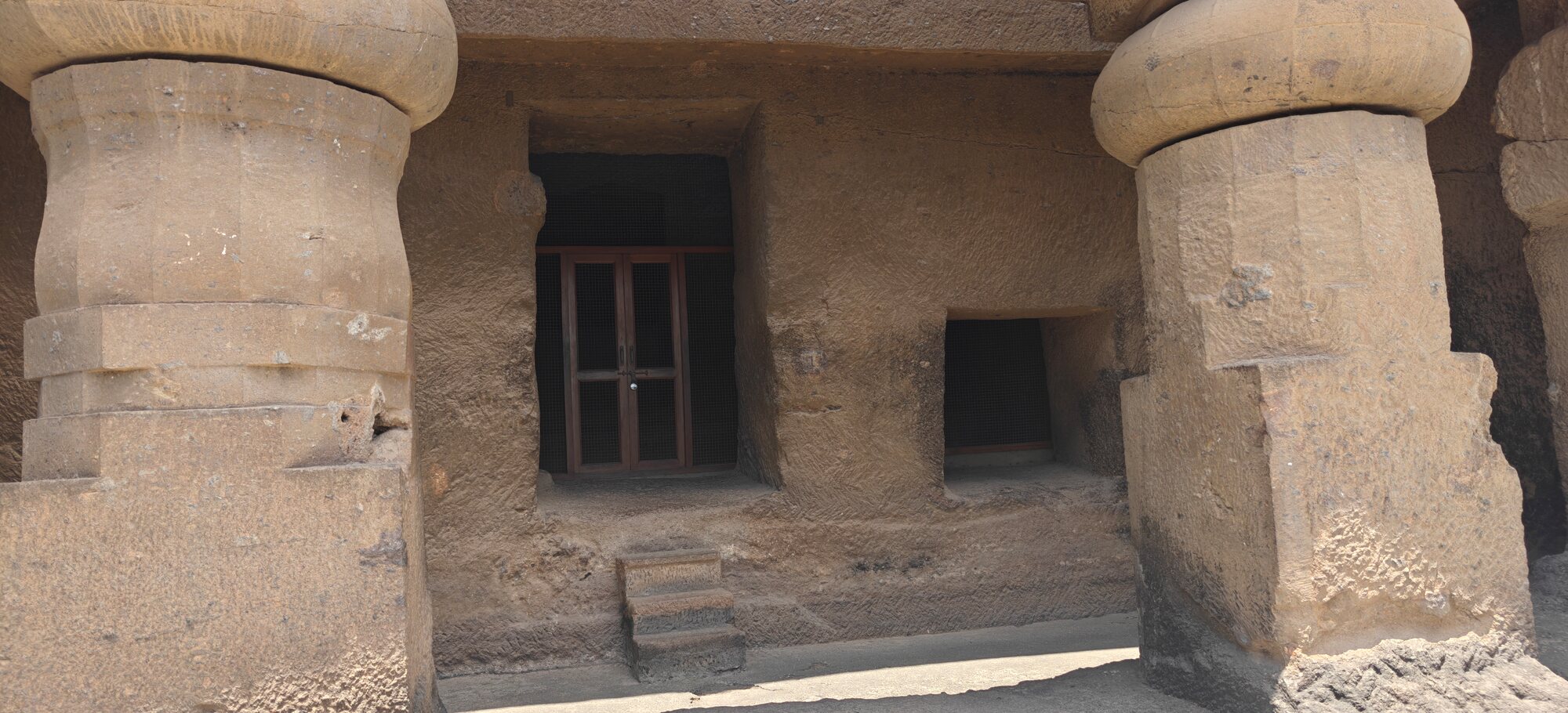
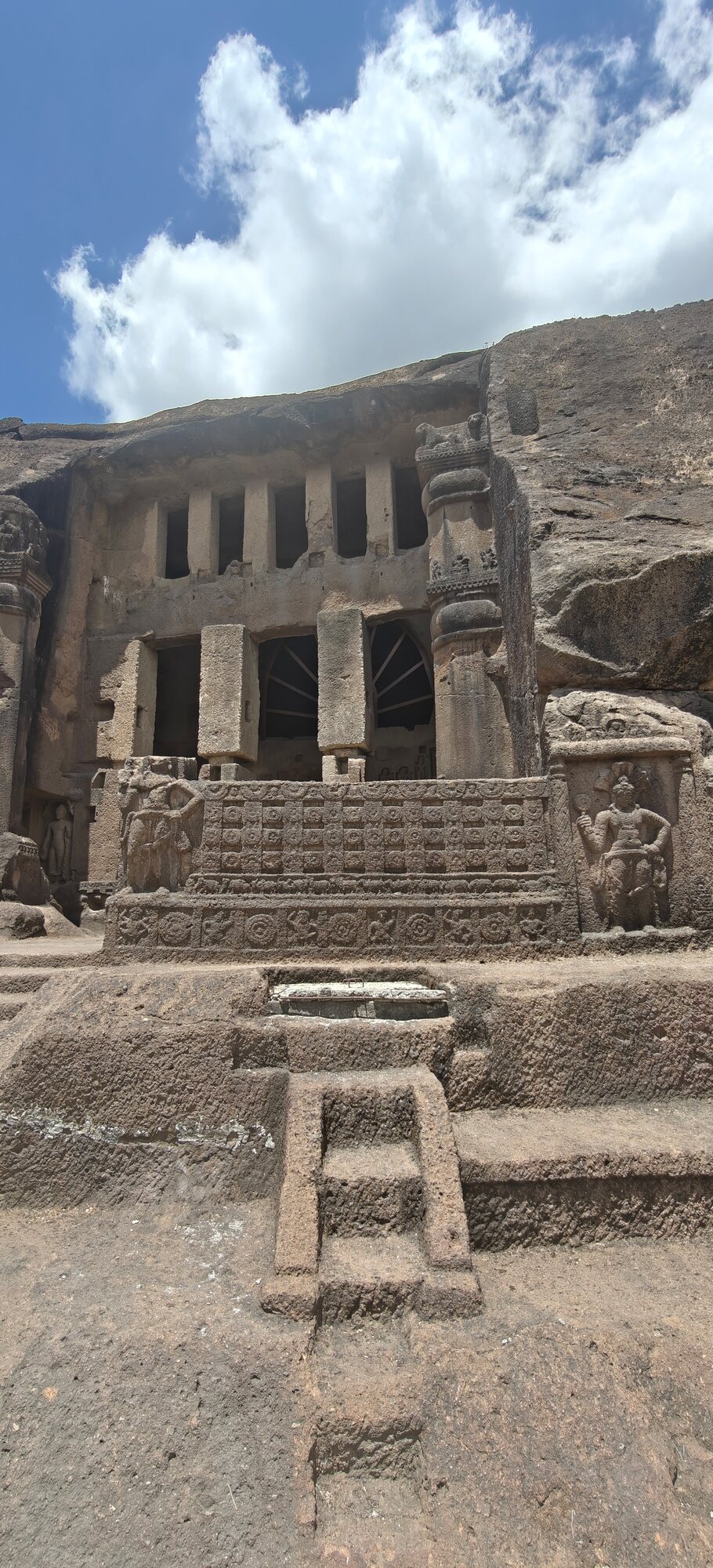
A doorway. The pillars are the same rock as the hill. Nothing was carried in from somewhere else.
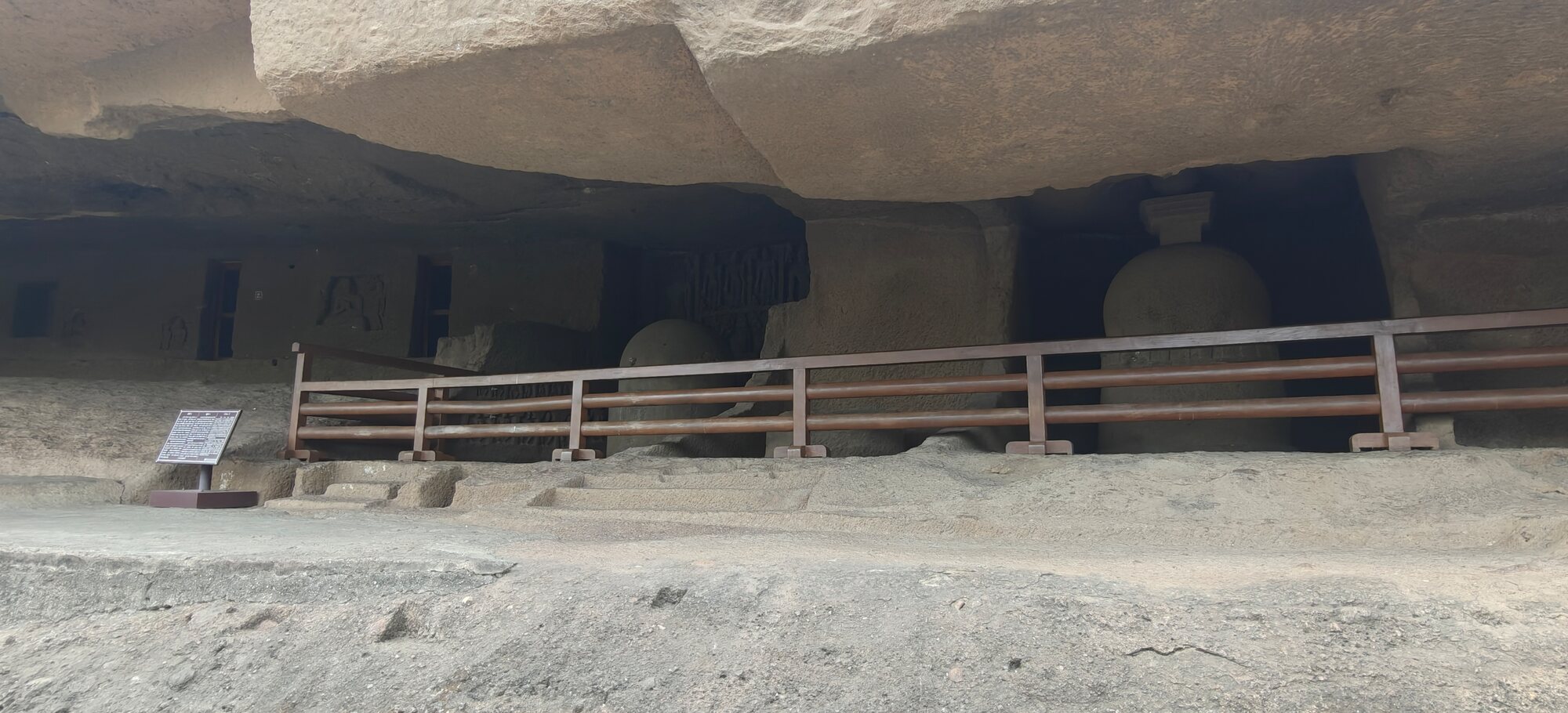
Then stupas, in the shade. A railing, so you look and stay outside.
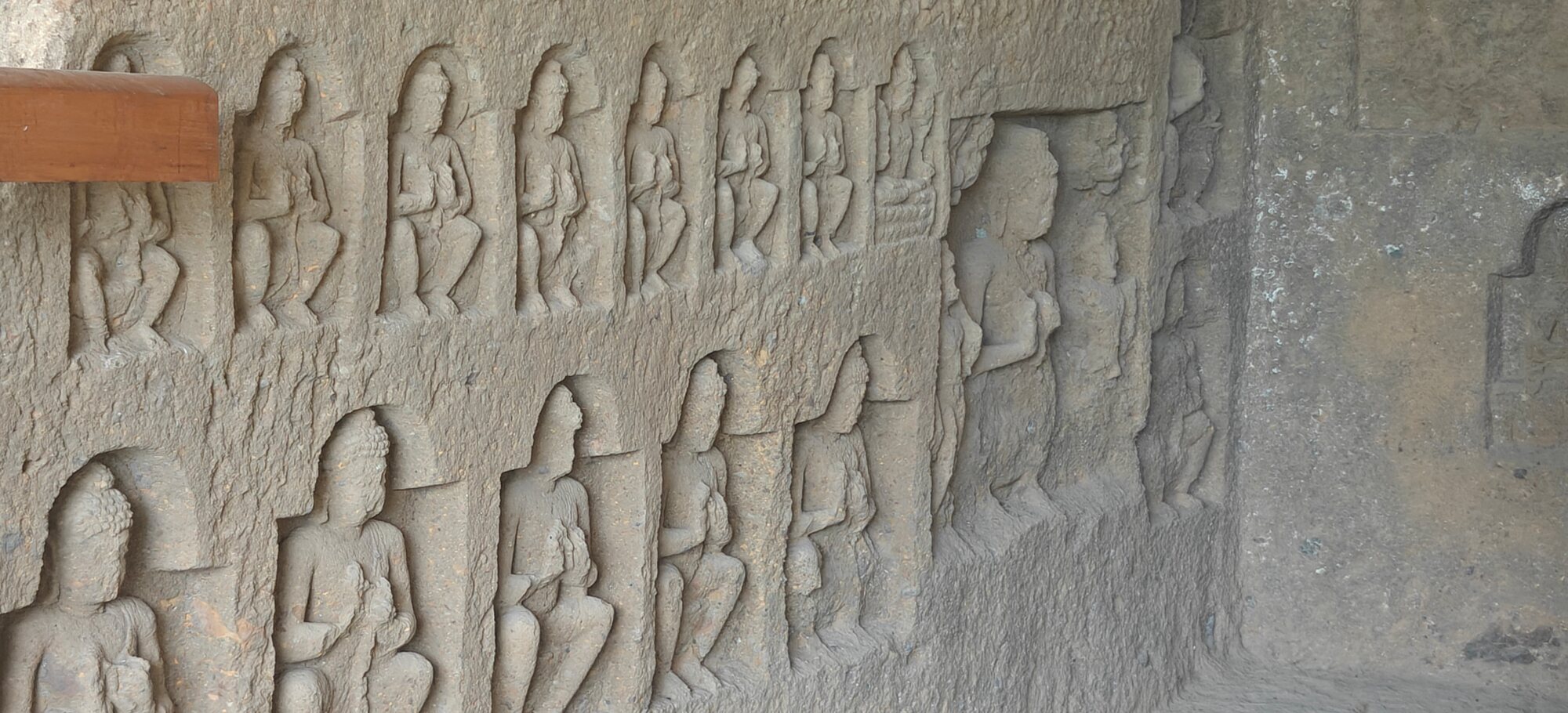
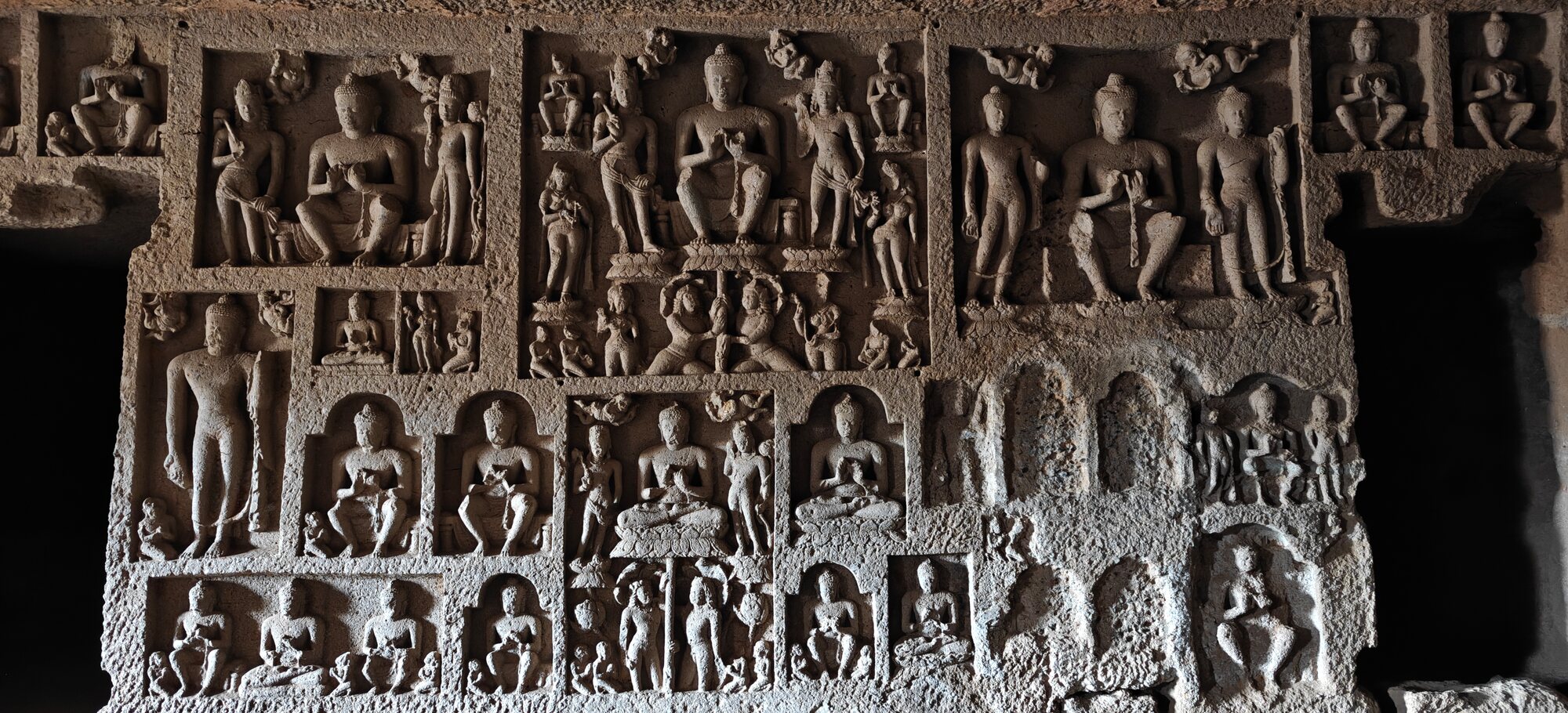
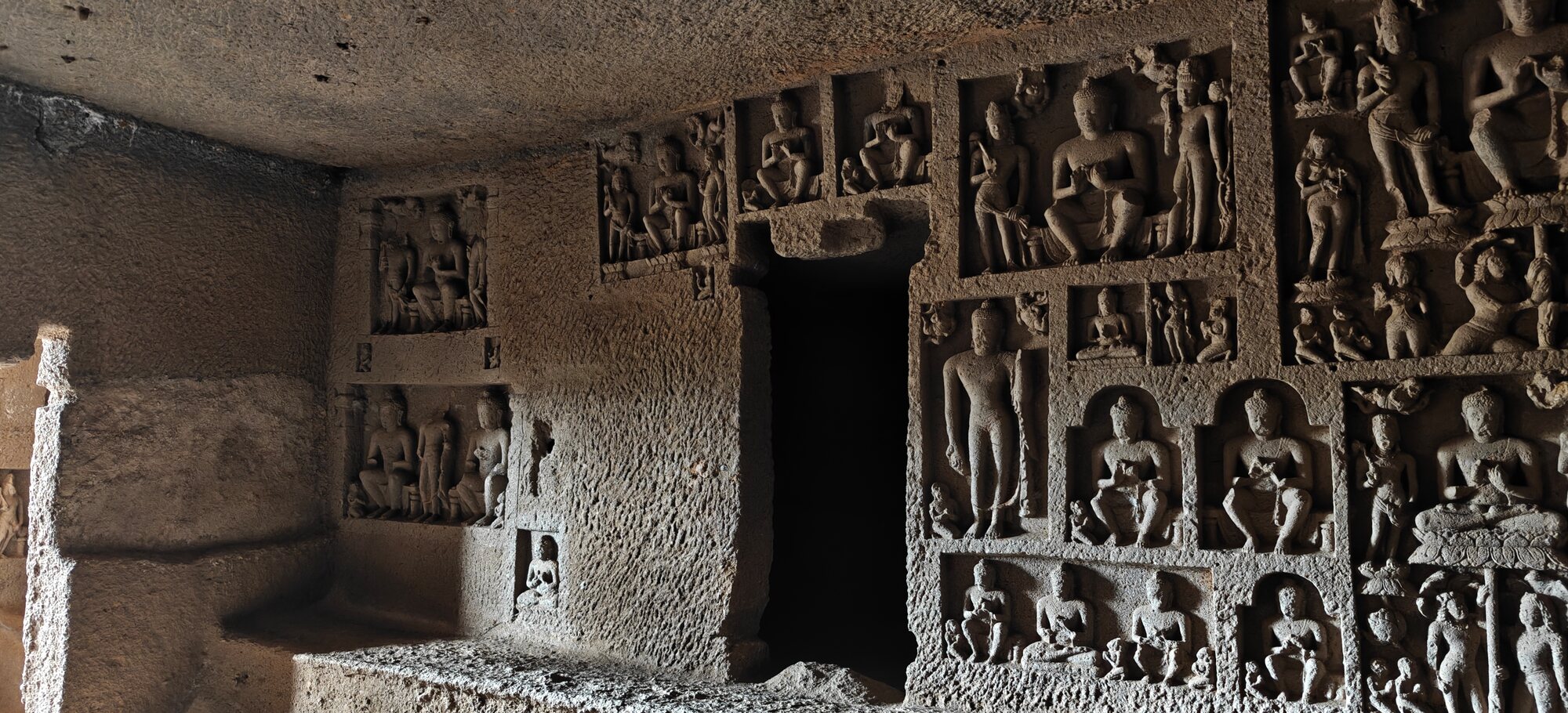
The wall next to them is full of small figures. Row after row.
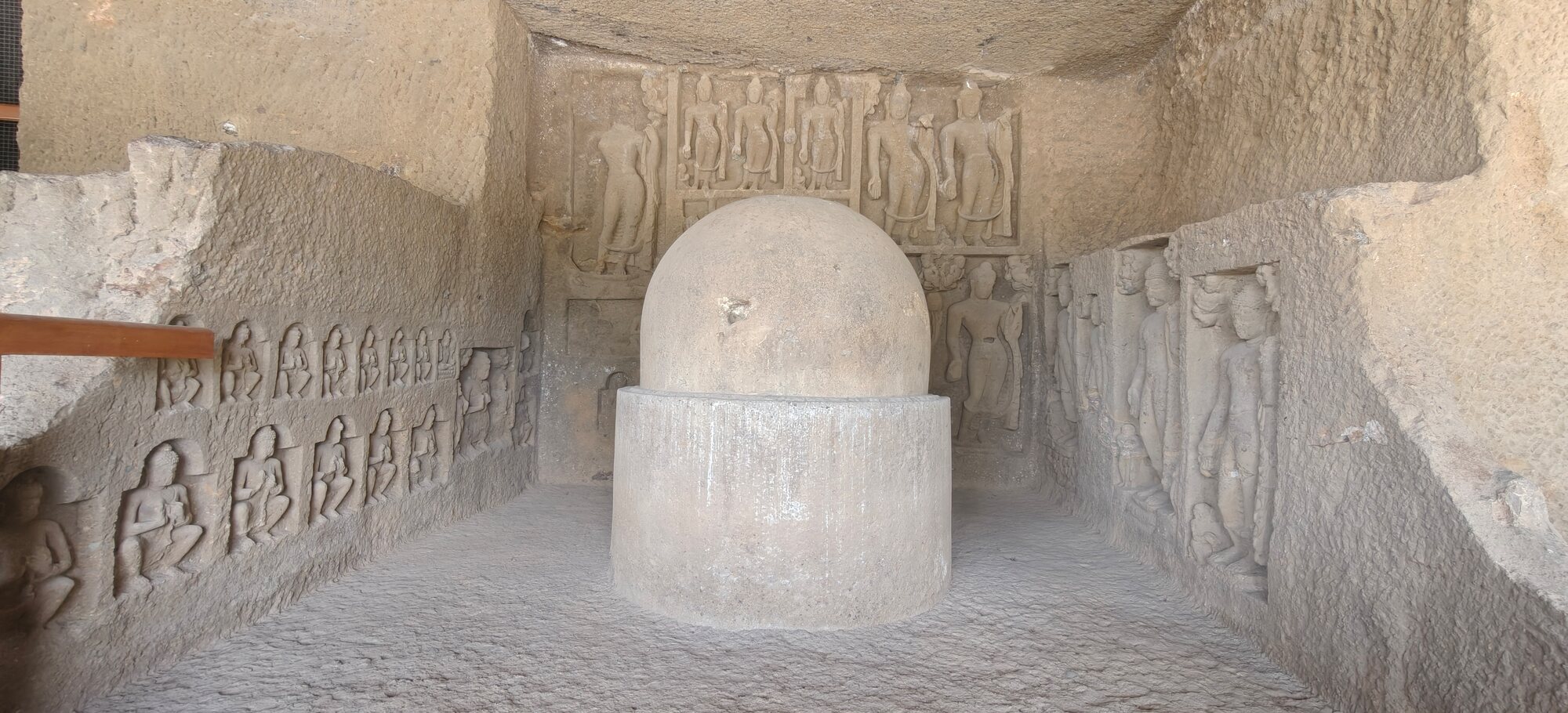
In a small hall, a stupa. Plain stone. The figures continue around it.
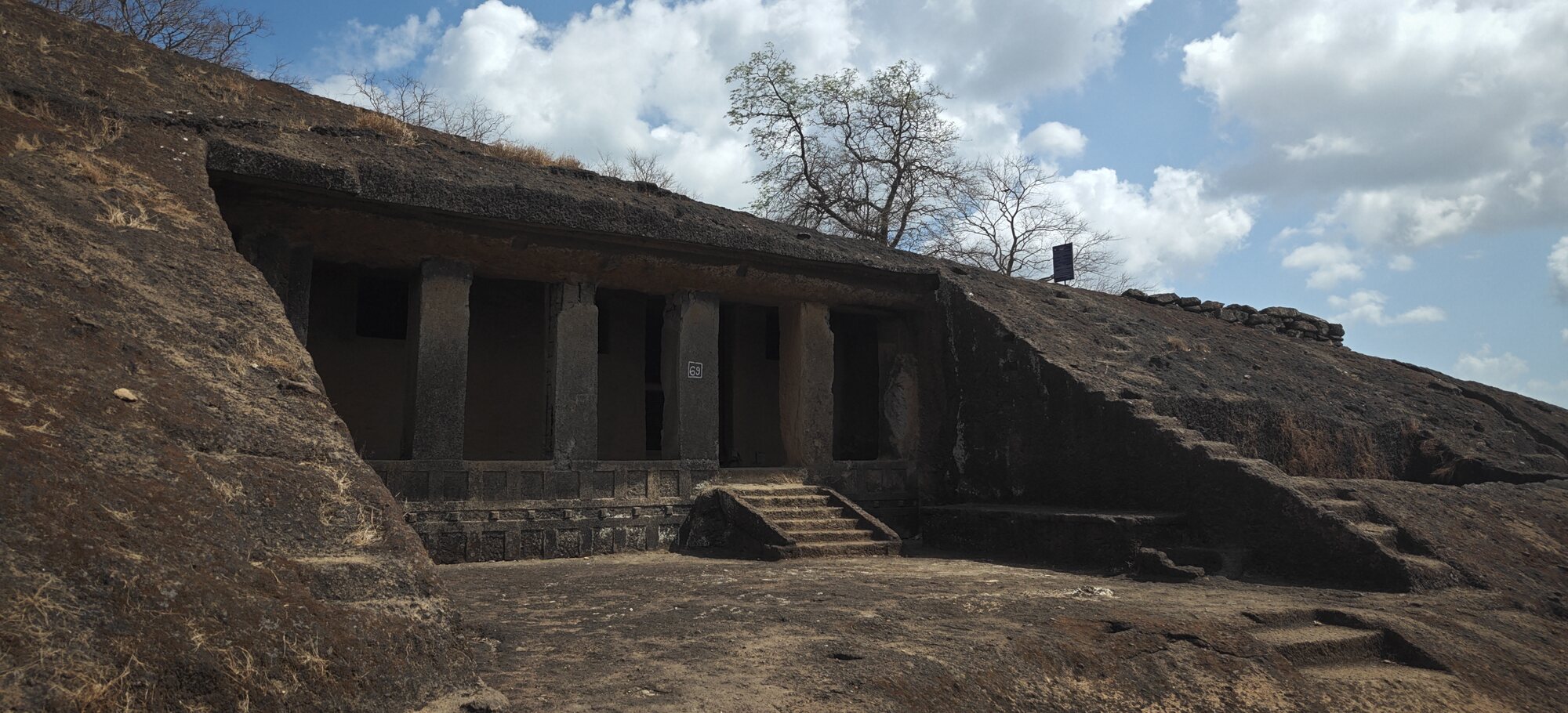
Further along, the front of a cave. Columns, and a window high up.
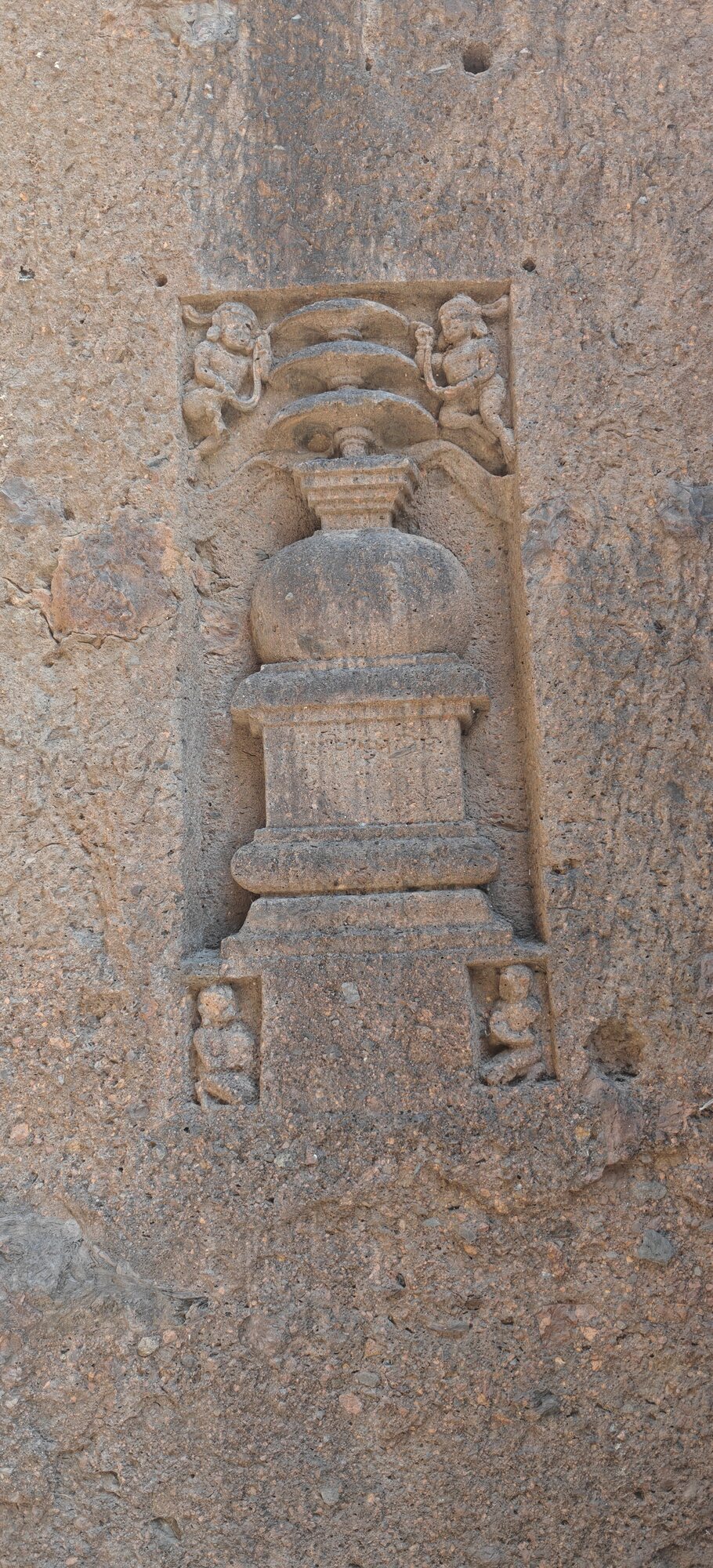
A stupa, carved into a panel. Small figures at the corners.
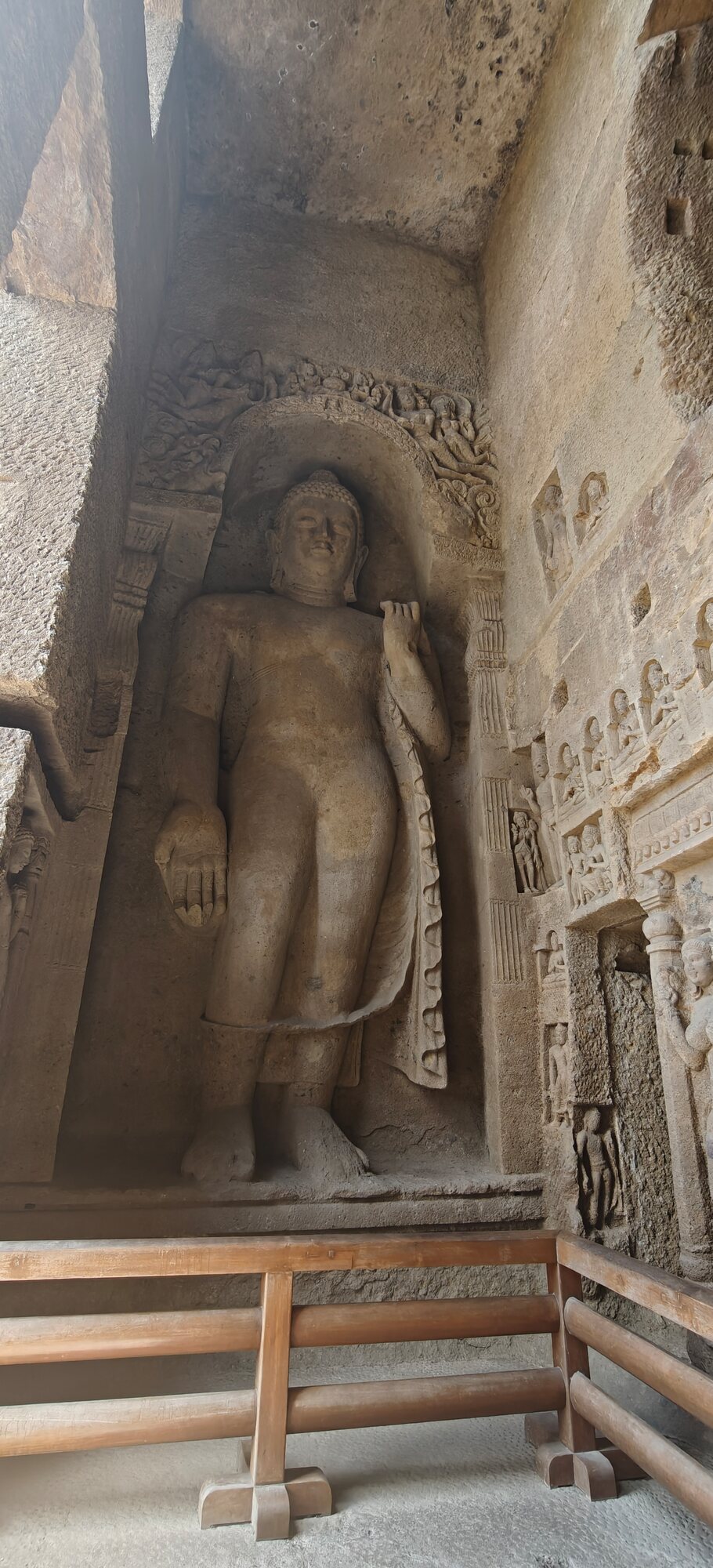
A standing Buddha.
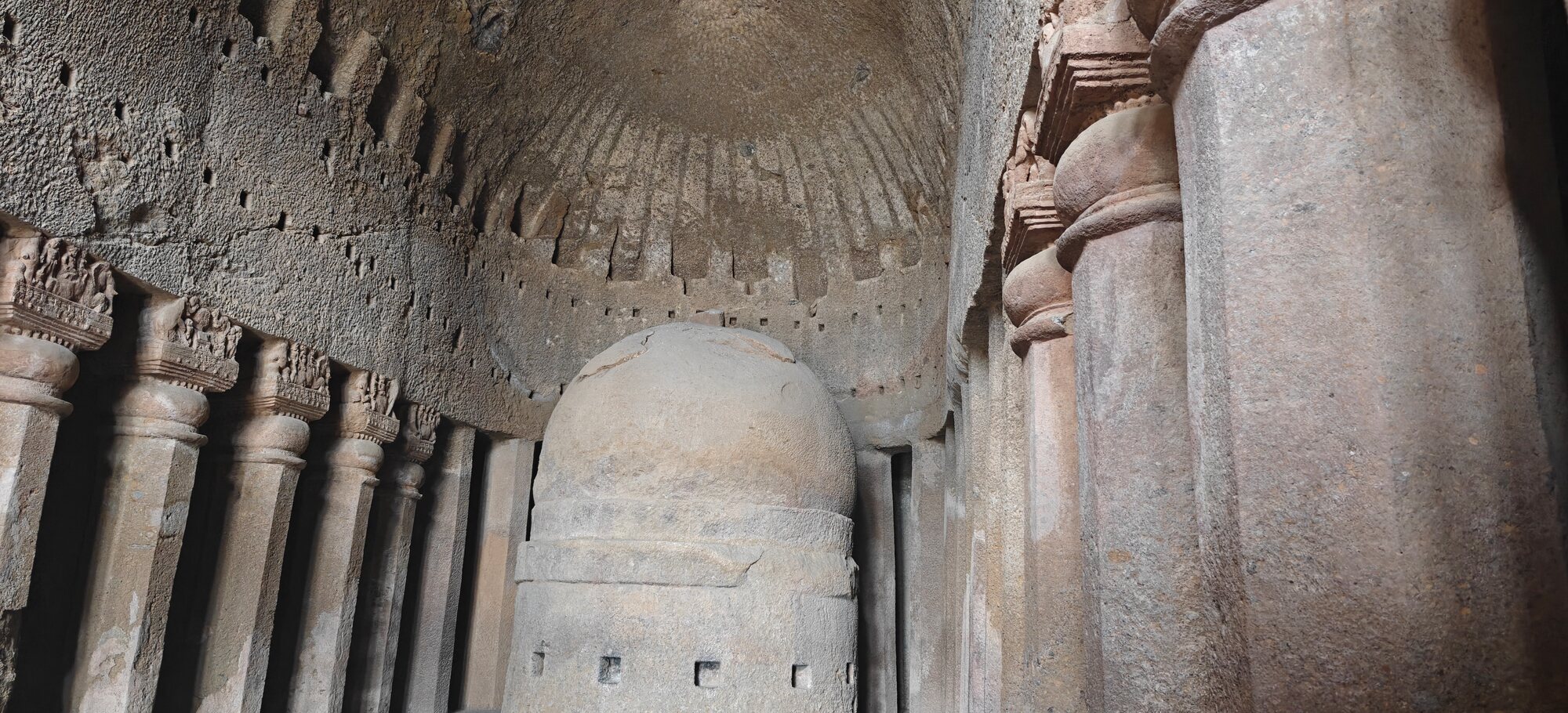
The big hall, a chaitya
Then the small caves open into the hall that stops you. A chaitya. Pillars on both sides, a stupa at the end, light from the door. After the climb outside, you can hear your own steps.
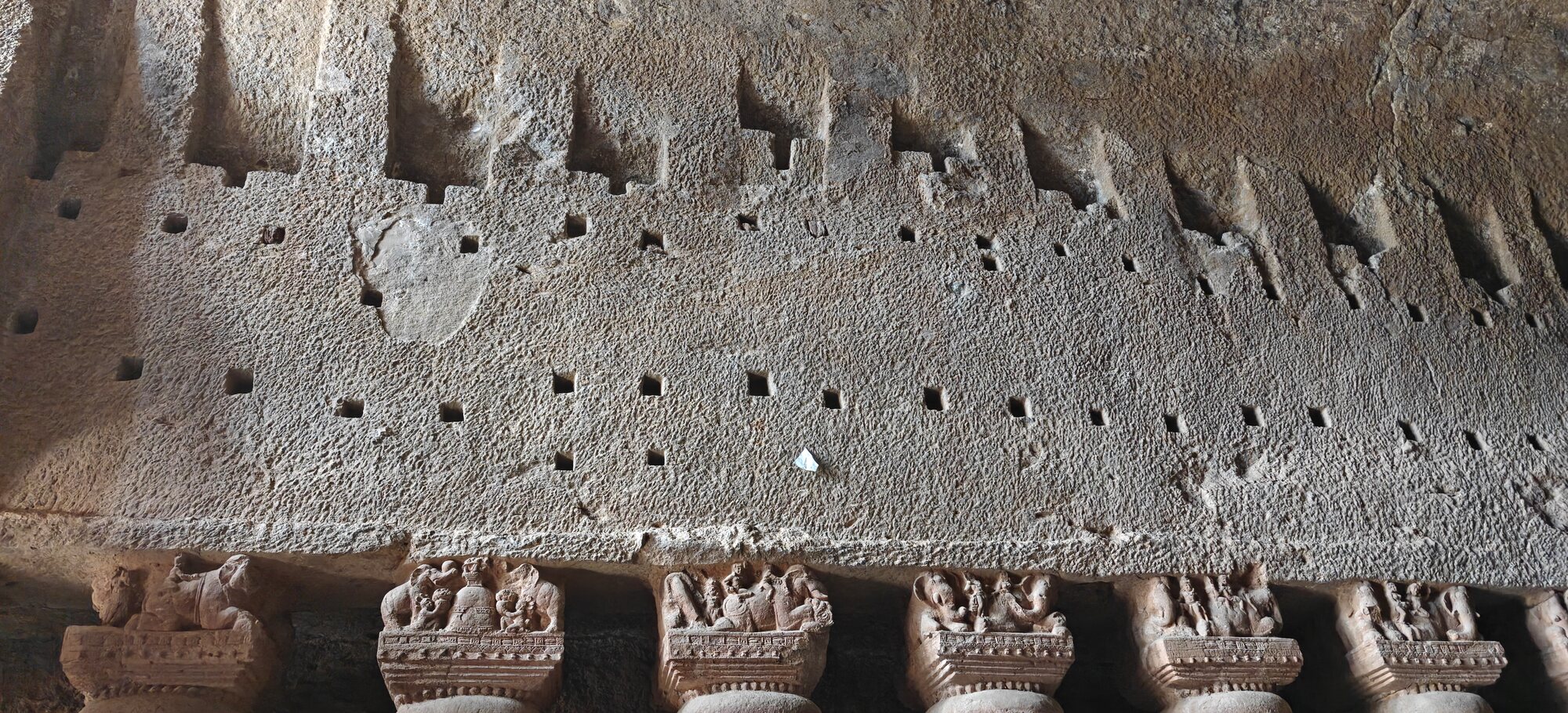
Look up. Brackets along the ceiling, and small carved figures.
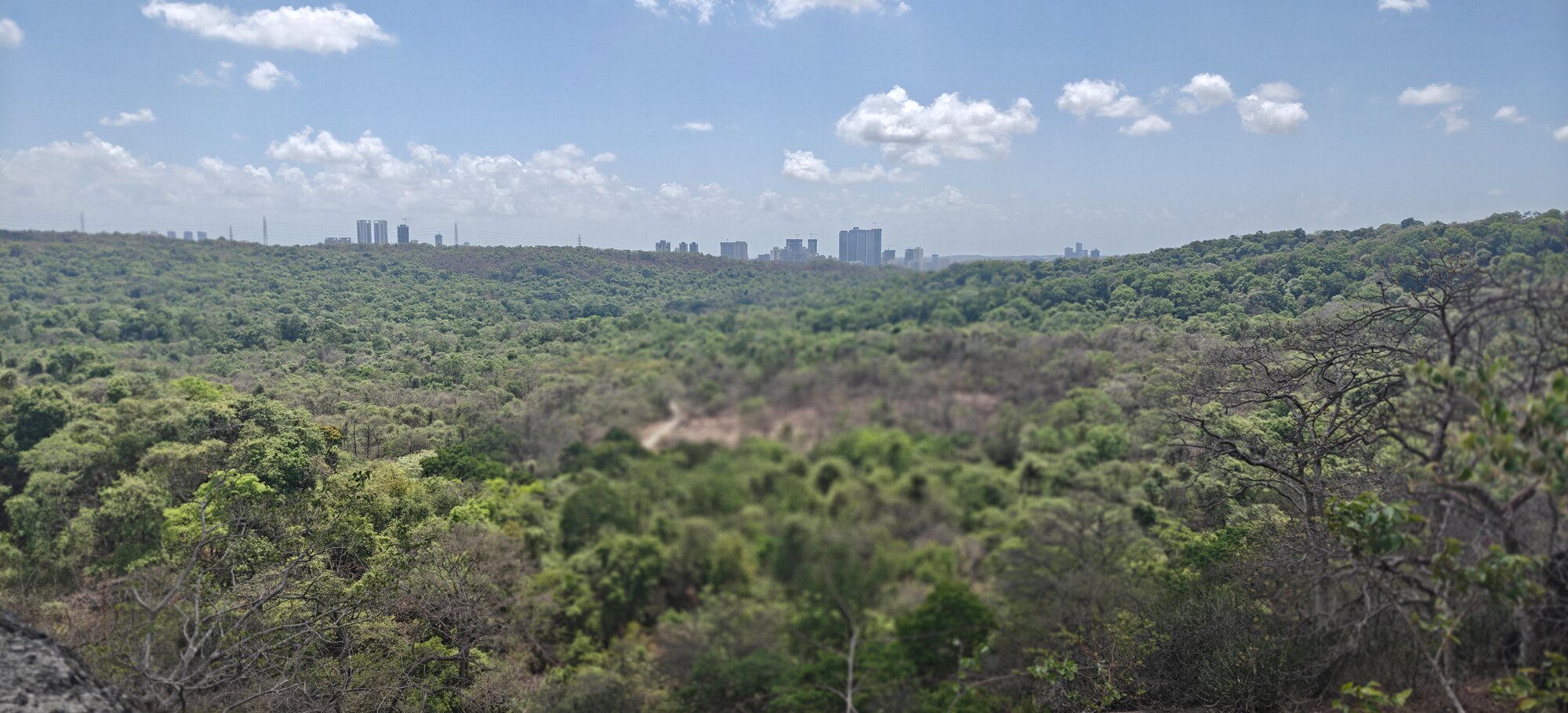
Then we were outside again. Forest down the slope, and towers in the distance.
They cut tanks into the rock for rainwater. This one is still a dark pool.
The steps are cut in the same stone.
Where they slept, and cave 35
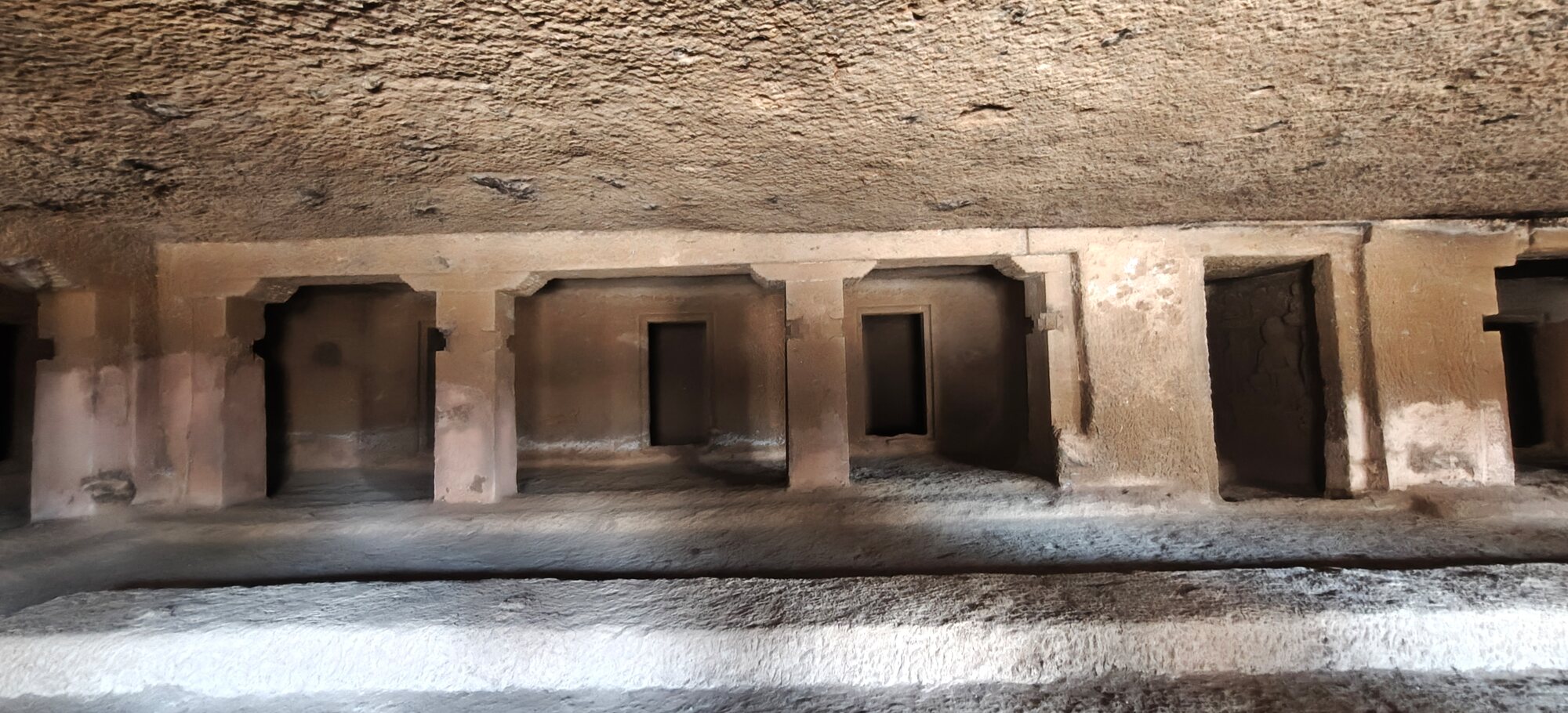
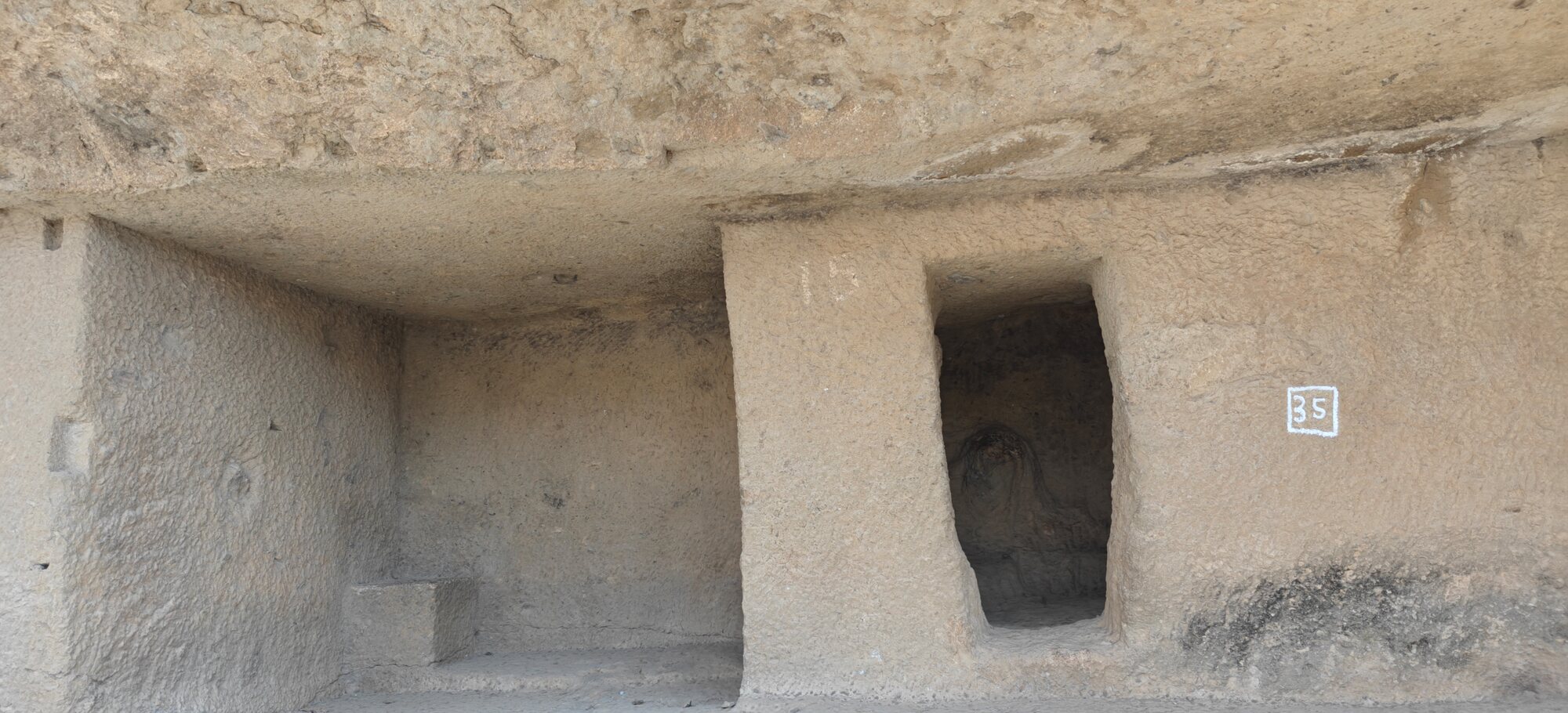
Beyond the hall, the monastery becomes easier to imagine as a place where people lived. A row of small cells, each with a door. This is where the monks slept.
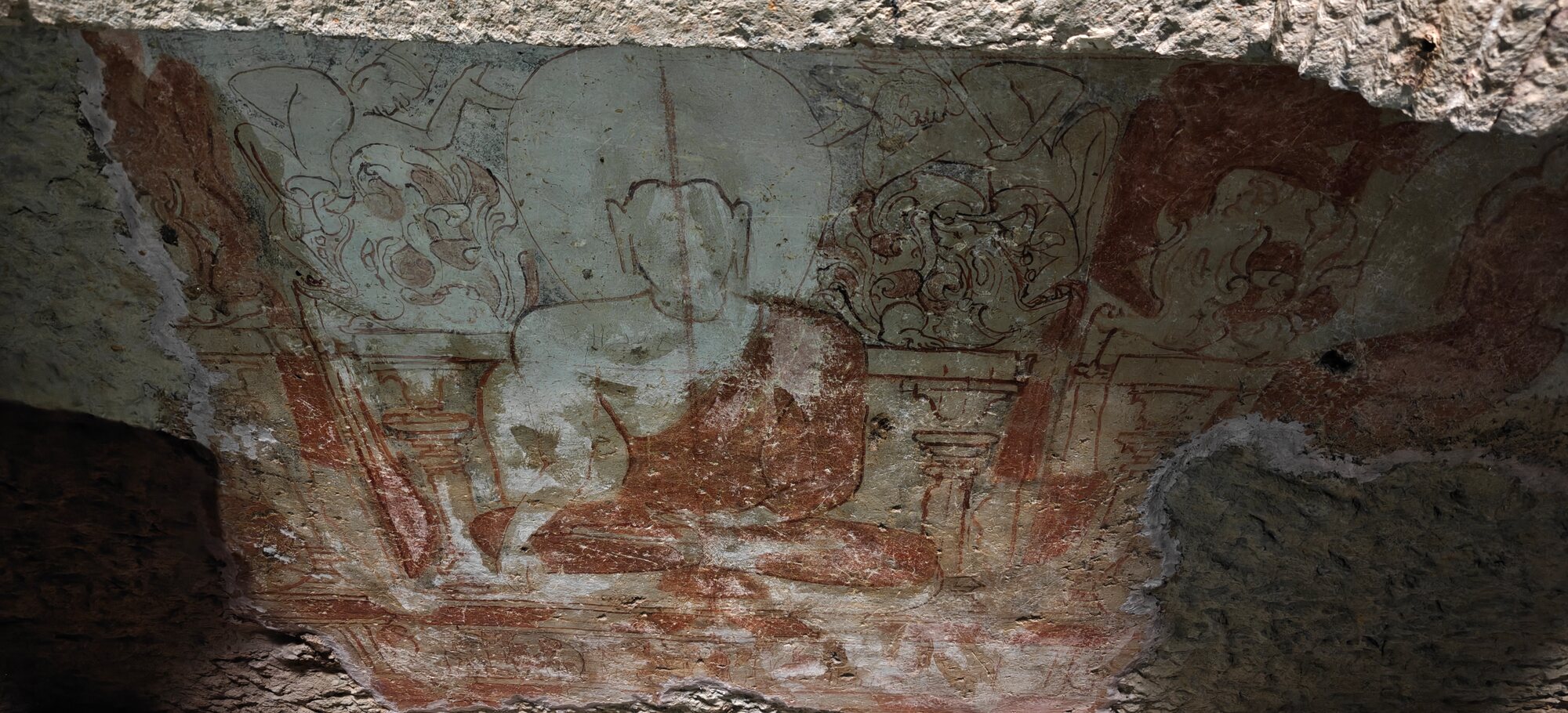
Some paint is still on a ceiling. Faded. A figure, and others around.
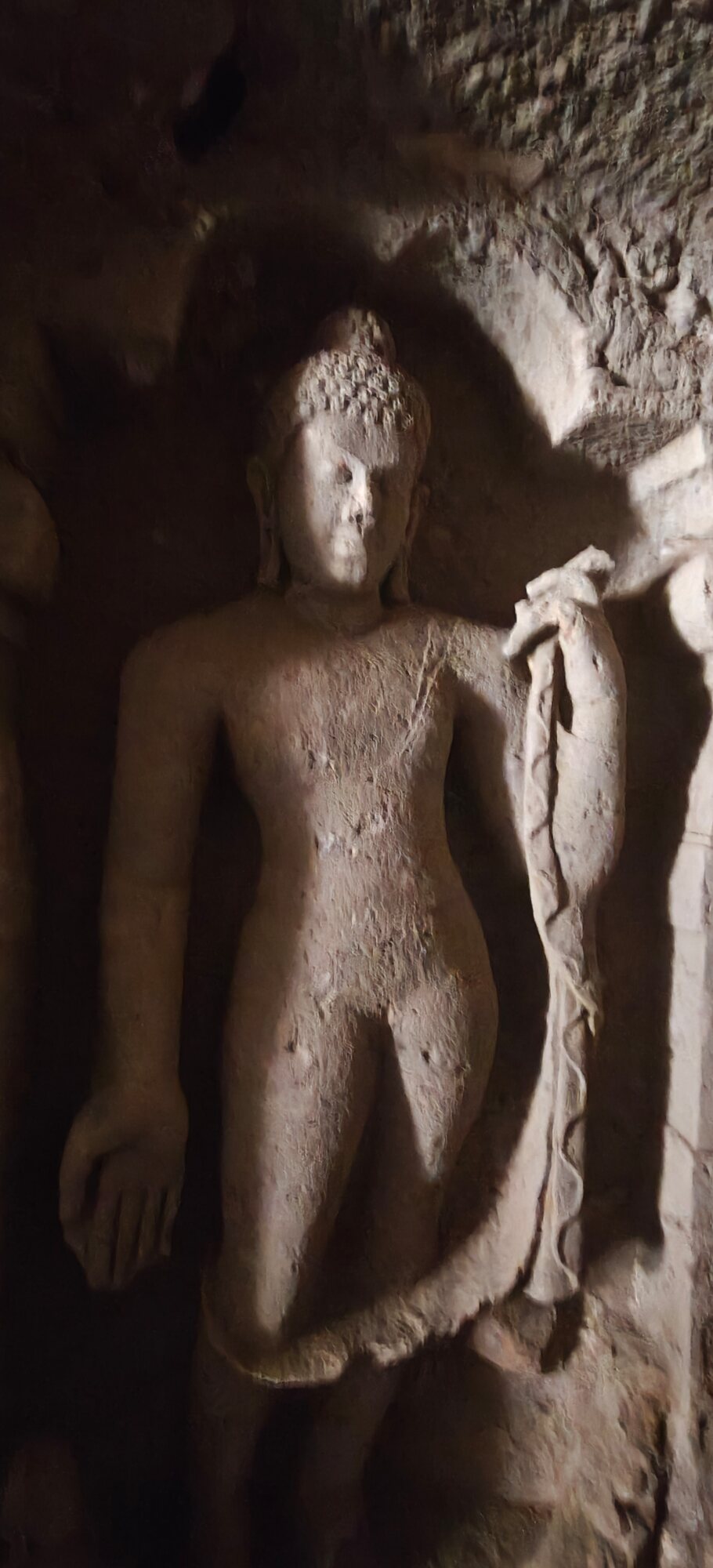
Another standing figure, further in.
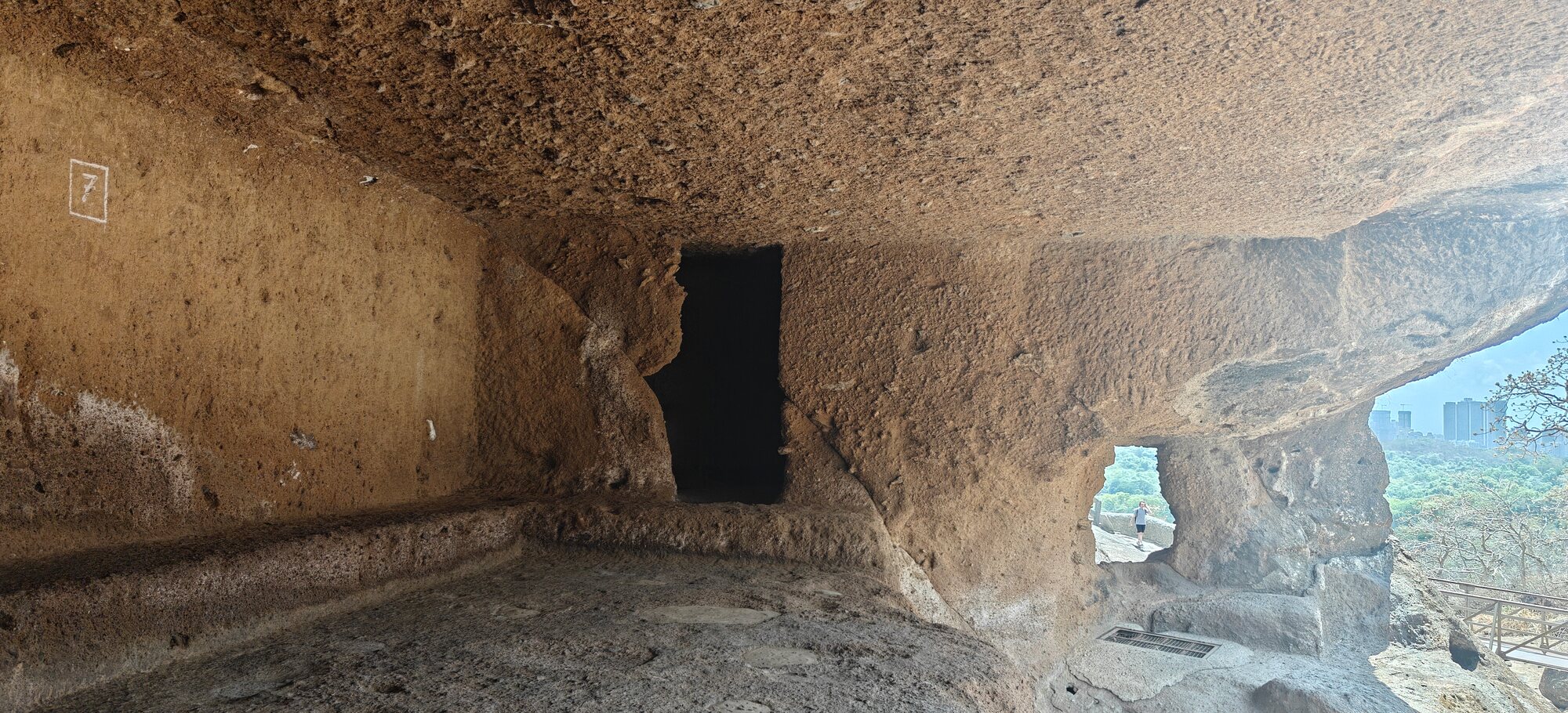
One of them has a number painted on the wall. 35.
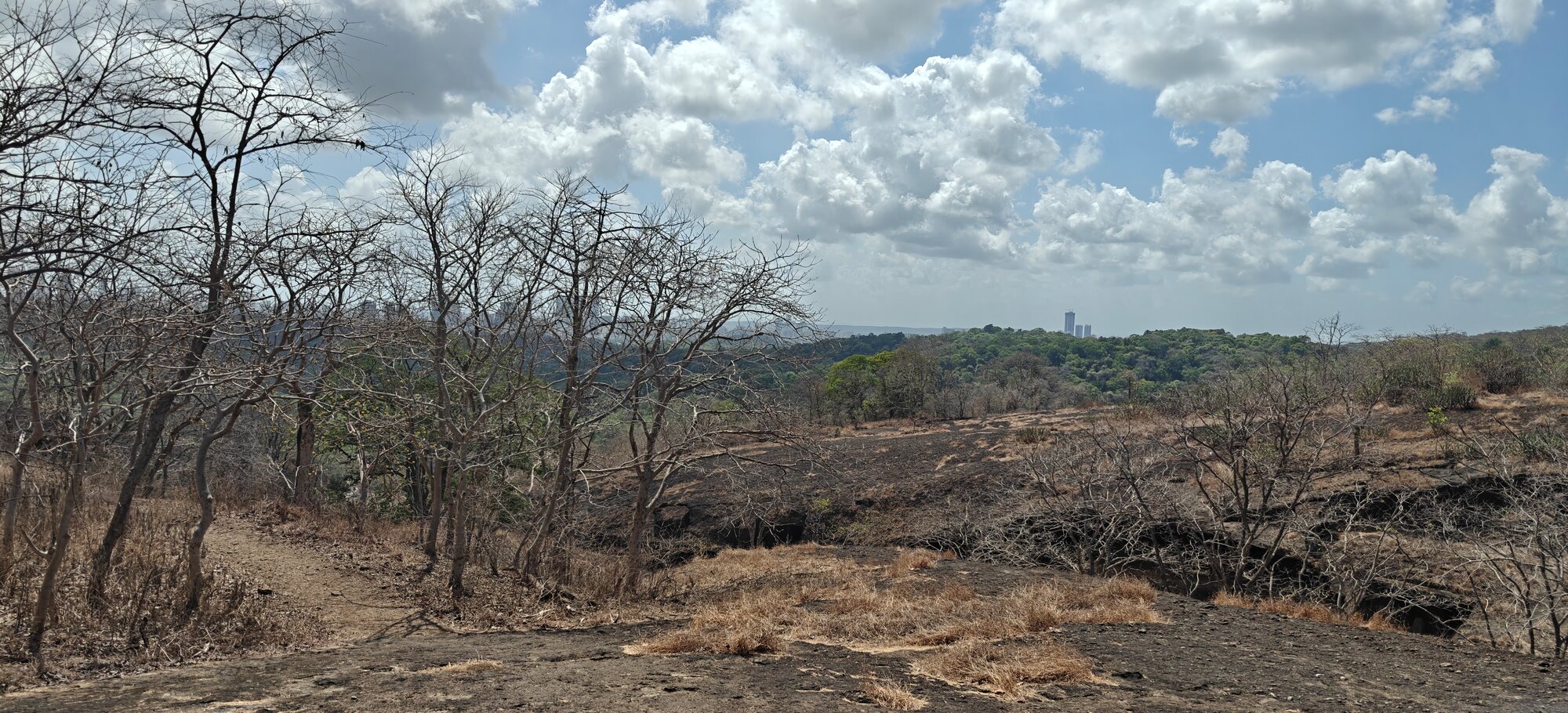
Higher up, from the rock. Dry trees, and the land going out flat.
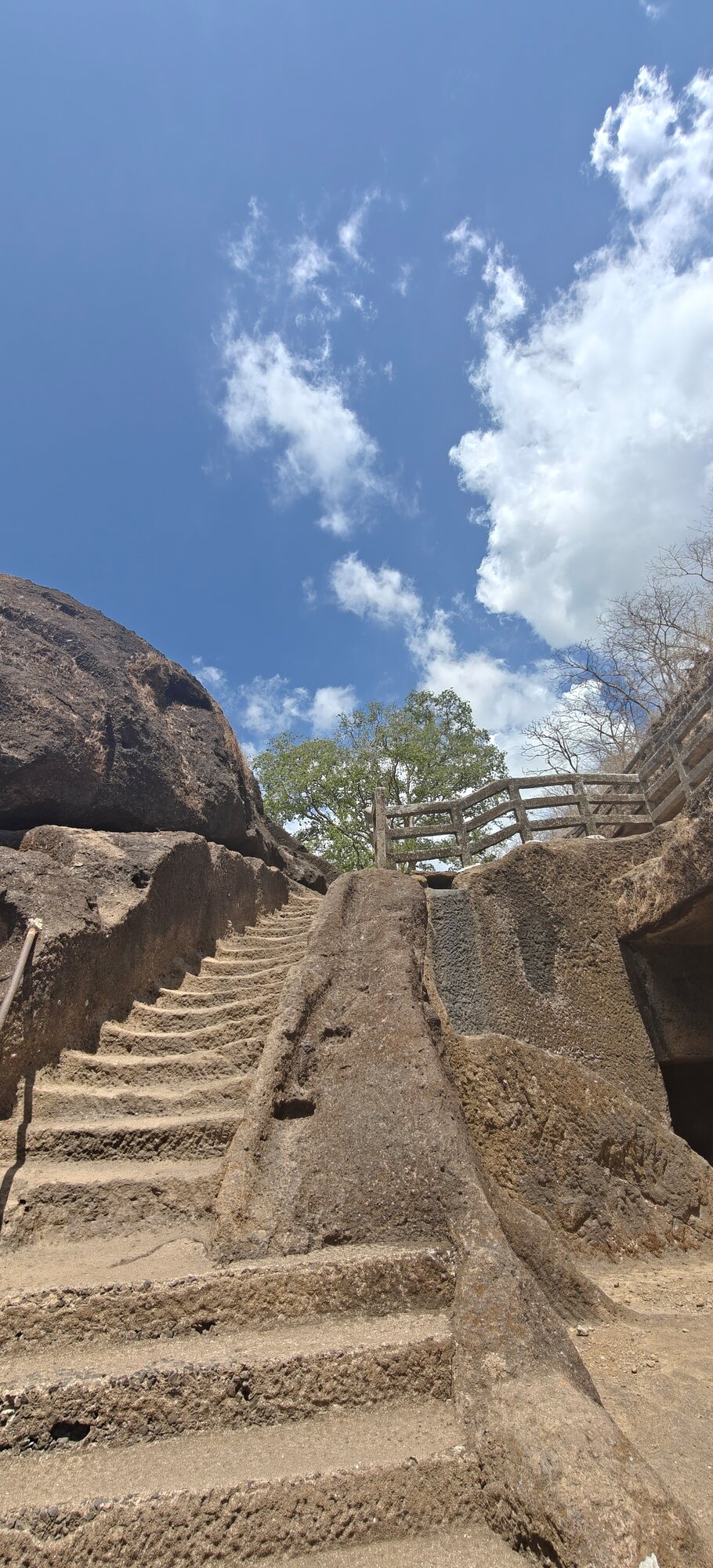
A door in the hill, and steps up to it.
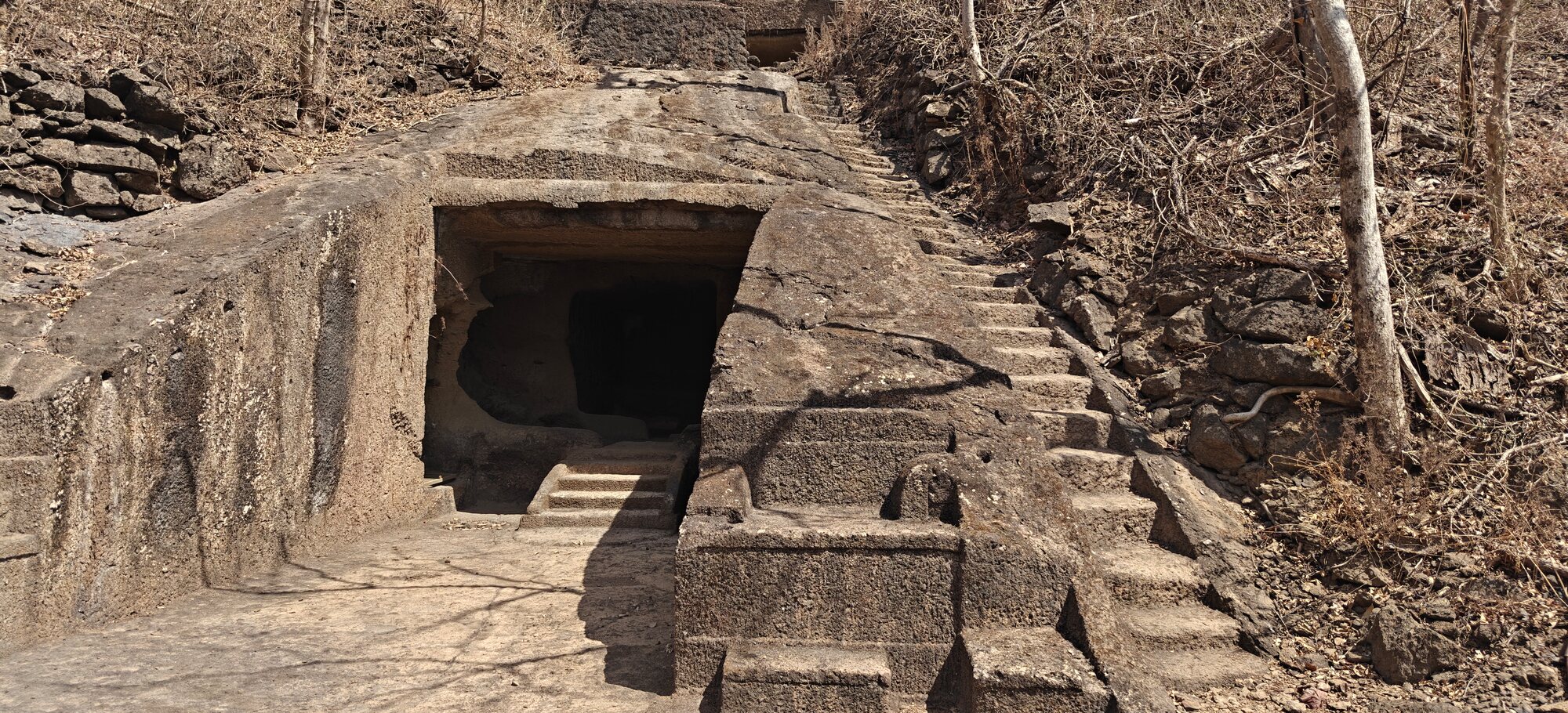
Then a wall of figures. Packed in, panel after panel.
A colonnade along the face of the rock.
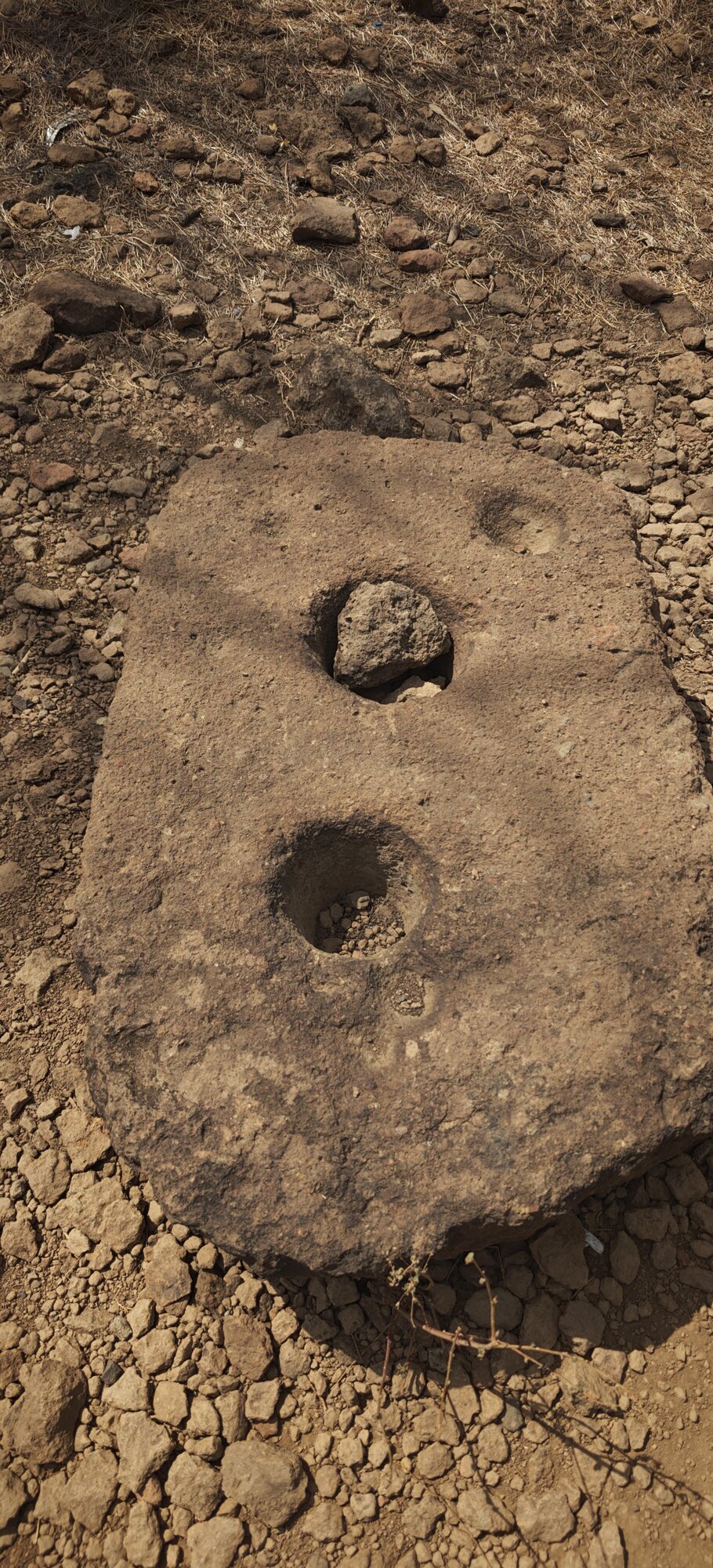
Two holes in a stone. For grinding, from what we’ve read.
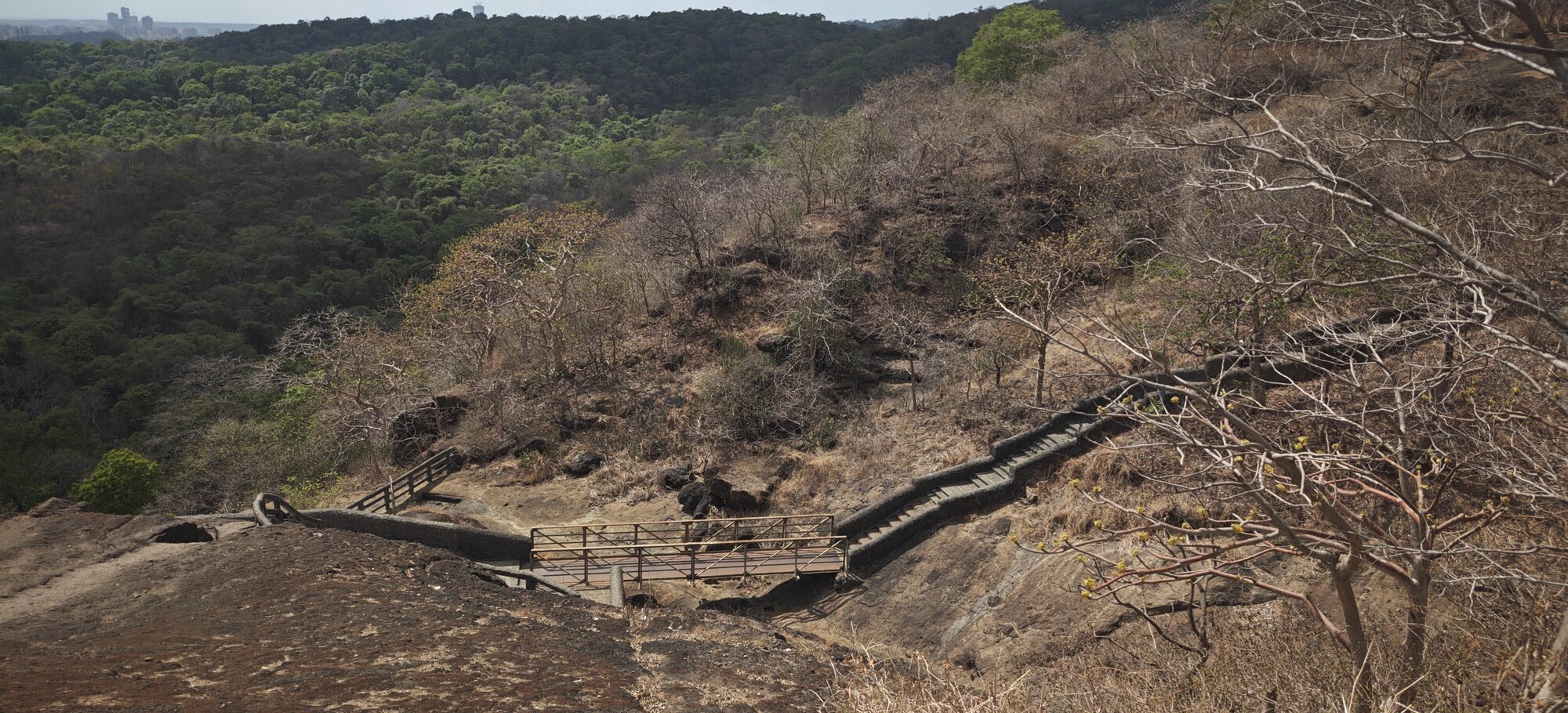
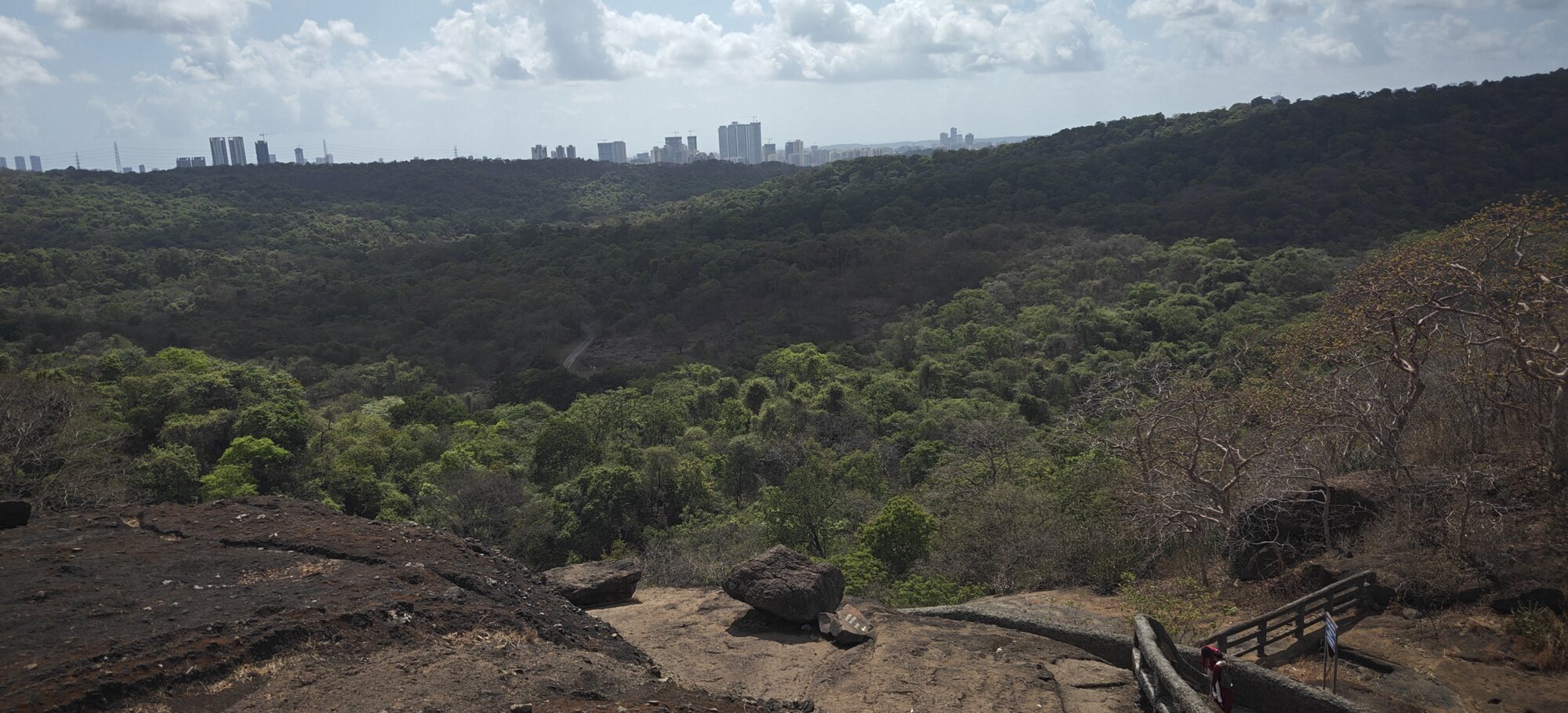
Back down, with Mumbai past the trees
The stairs go down the hill. Mumbai is on the other side of the forest.
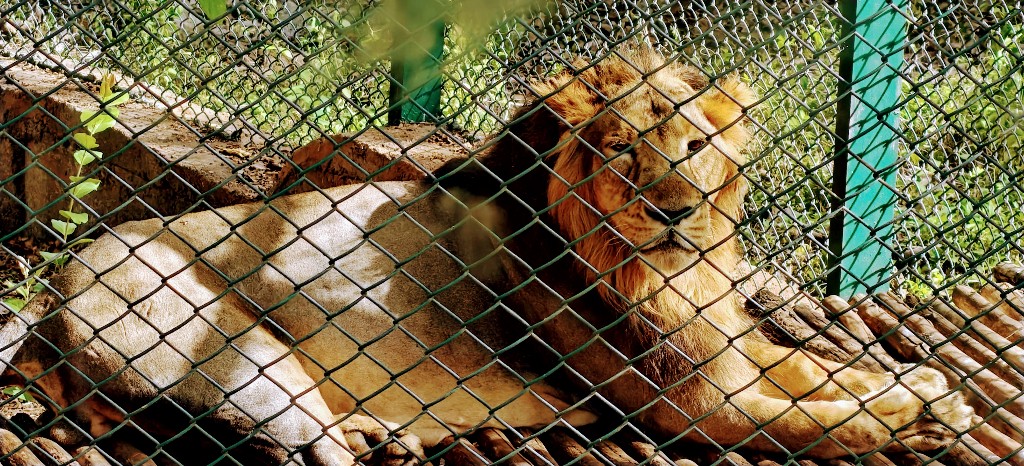
Still in the park, after the hill. A lion, lying in the shade, watching through the fence.
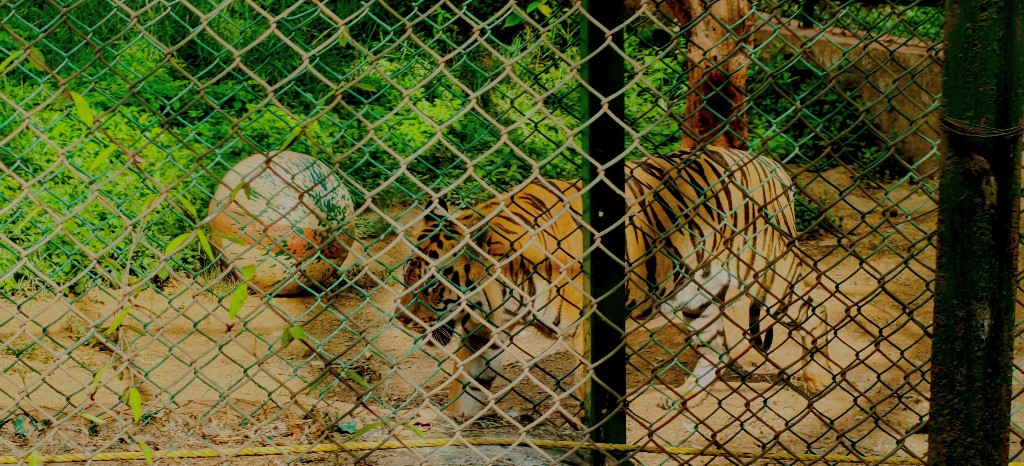
A little further along, from the van, a tiger behind the same fence. You wonder about the camouflage. The stripes just disappear into the mesh and the leaves.
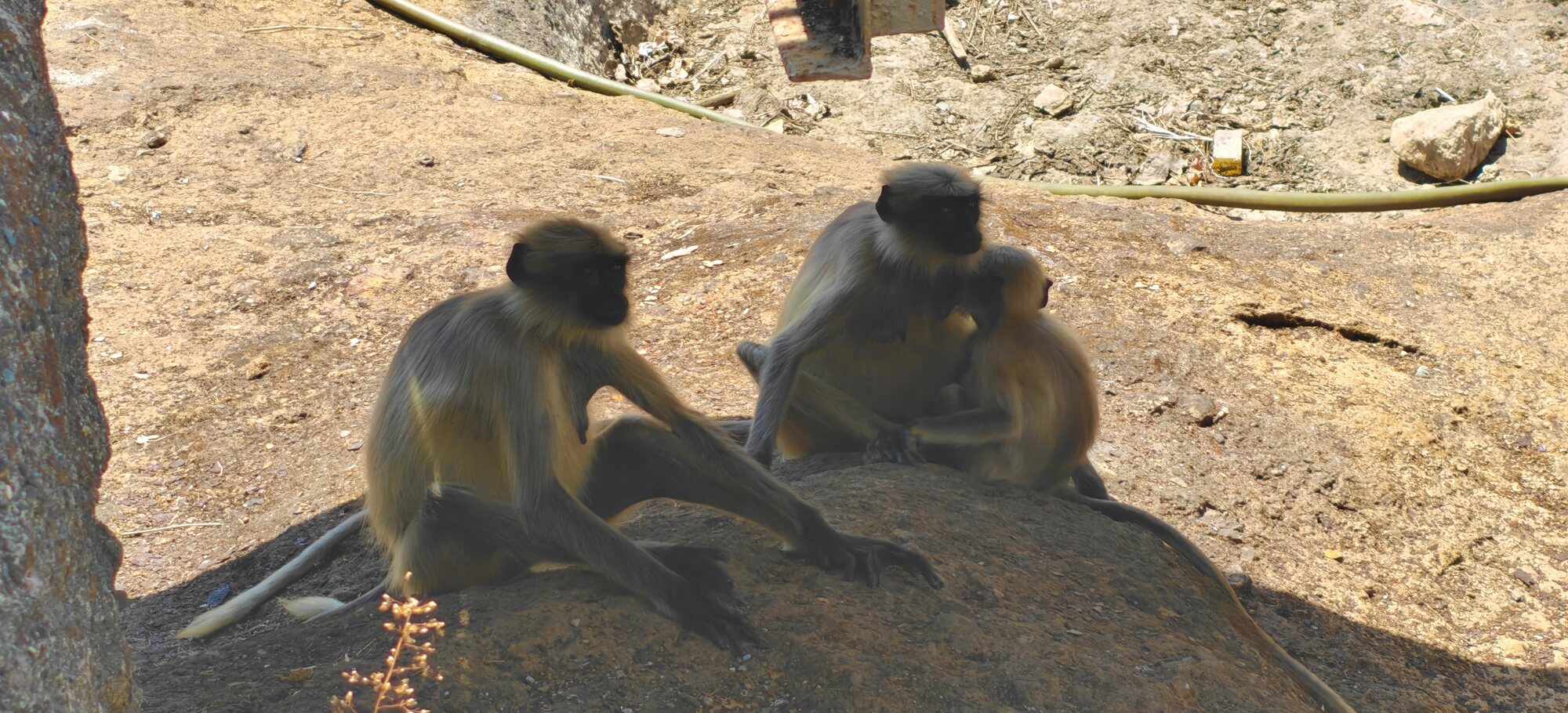

That’s Kanheri. A monastery in a forest, and the city just past the trees.
The last part of this Mumbai journey goes back to the water. The sea had been at the edge of these days all along: beautiful from the promenade, full of garbage at Juhu, and one long coastline from the plane. The story ends with the sea and Juhu.