This last part is not a single day. It is the water that kept returning through the trip: first at the end of my South Mumbai walk, then at Juhu after Kanheri, and finally from the plane.
18 June, evening. We had reached the sea at the Gateway, but the day did not end there. We stayed with the water as the light changed.
Buildings, and the sea under them
The city is tall along this coast. Glass, cranes, one tower after another. From the road they fill the sky; from the water they become a line on the far side.
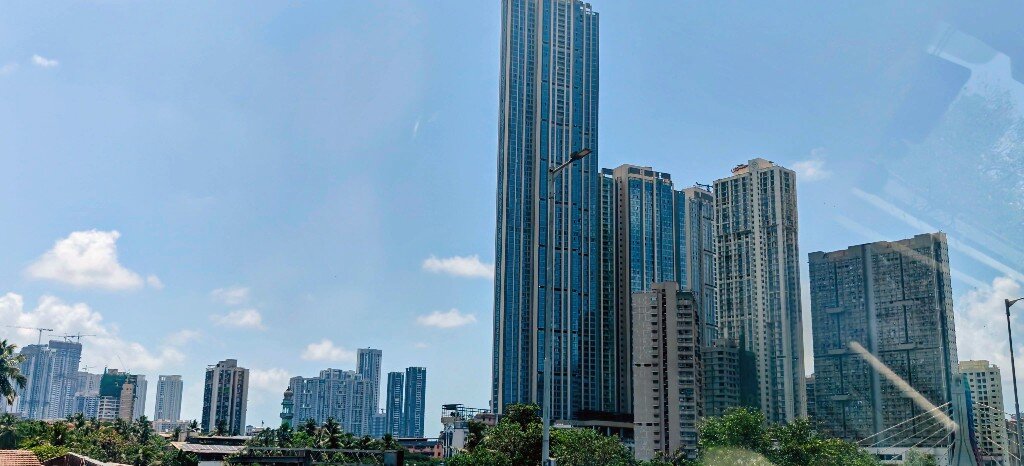
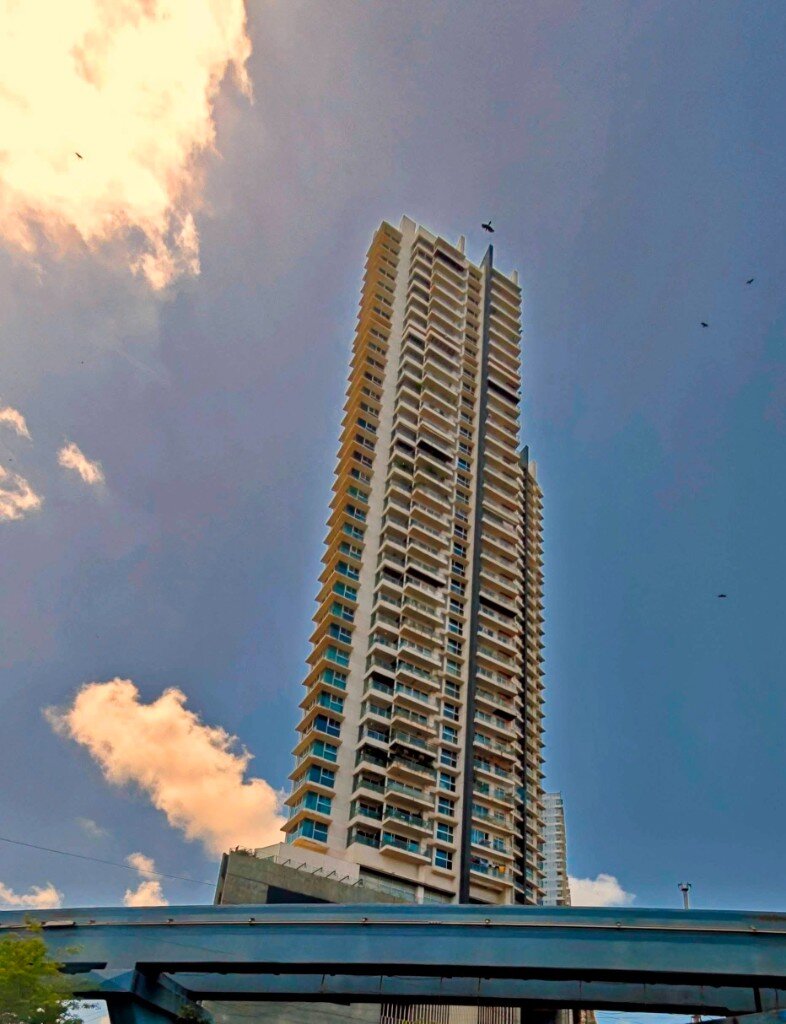
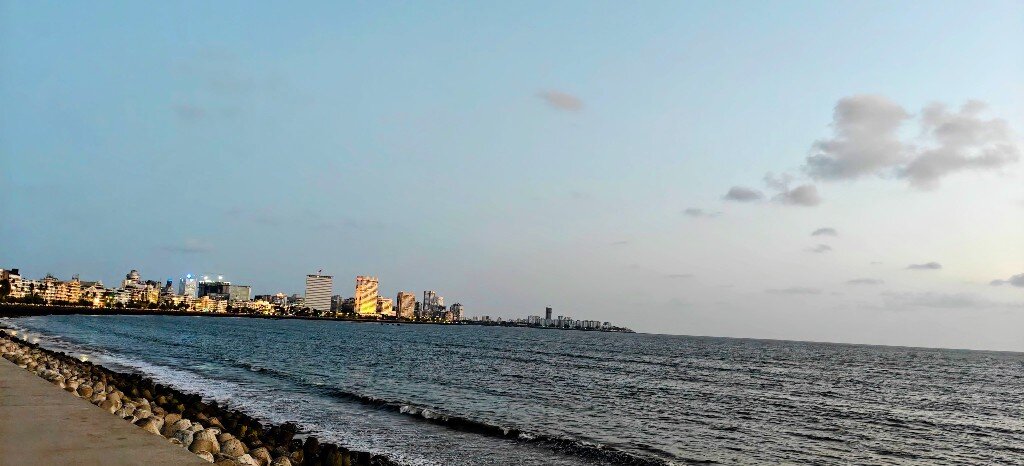
Then the water opens, and the skyline sits on the far side.
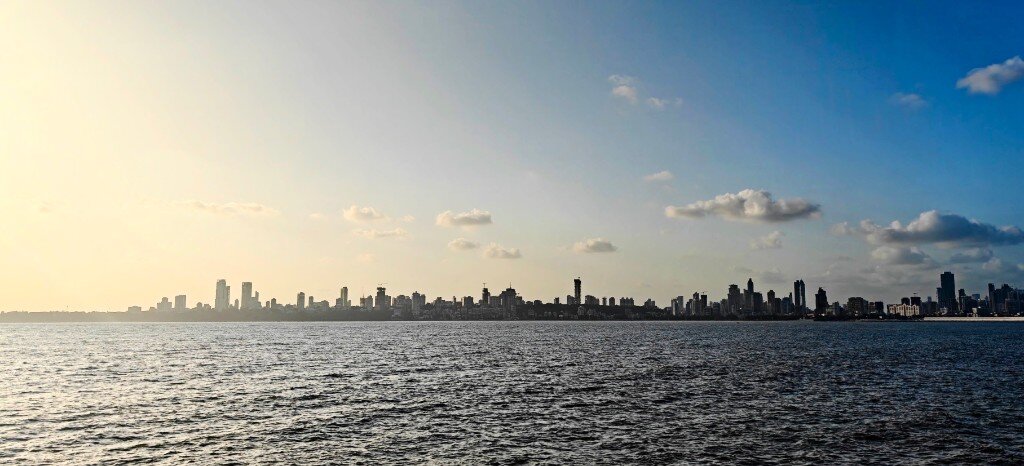
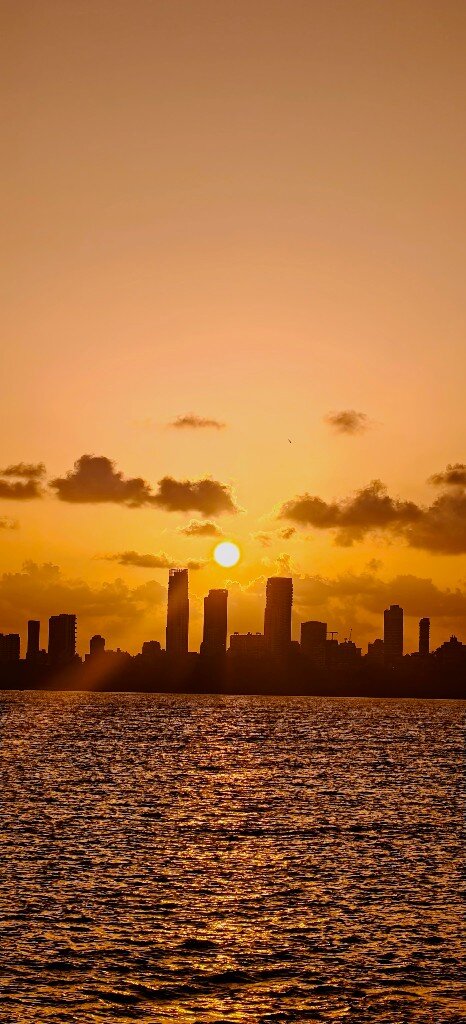
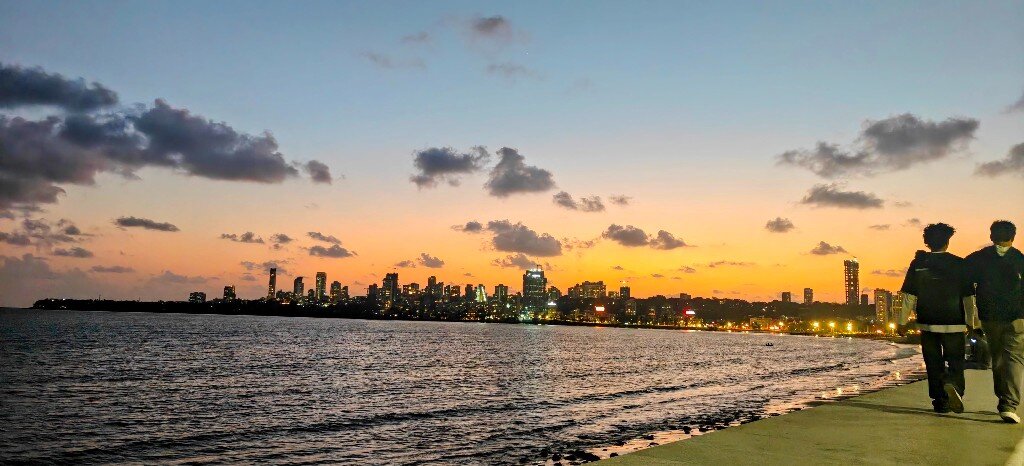
The sea turning gold
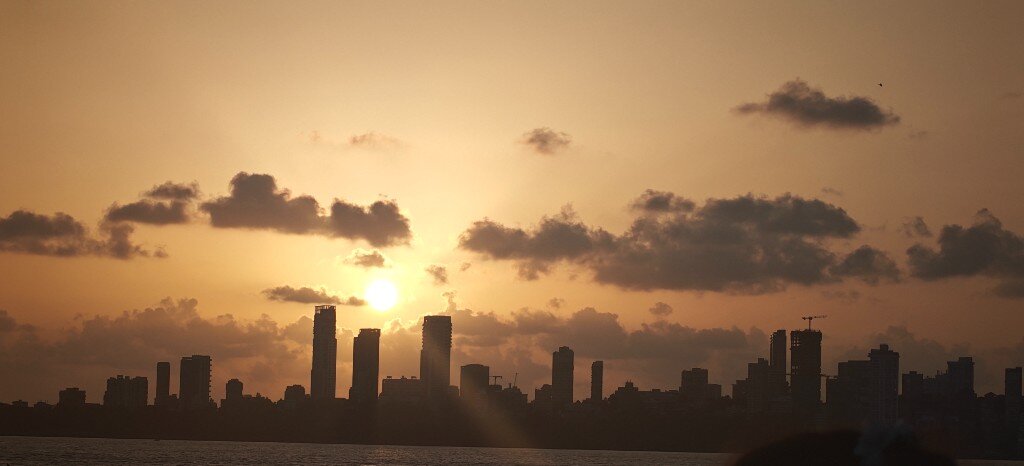
Then the sun drops behind the towers, and the sea turns gold. This was the beautiful side of the coast.
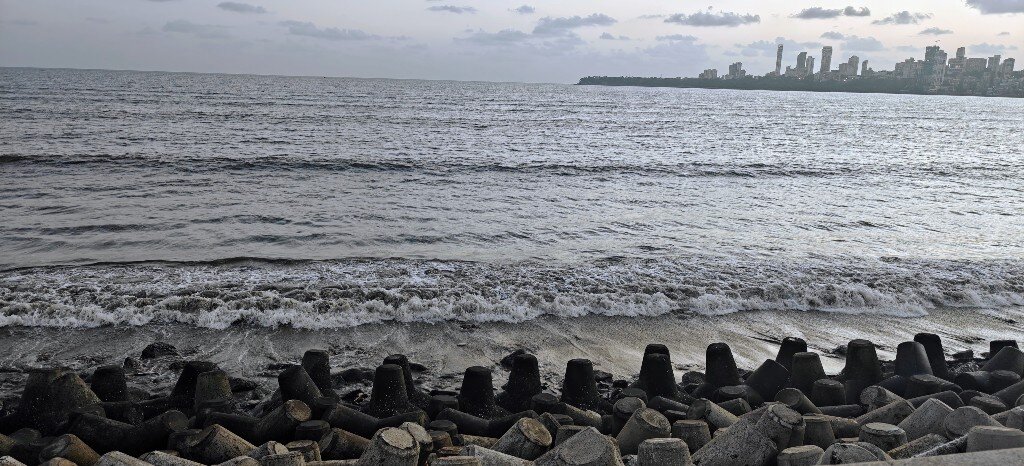
Concrete blocks along the shore, to break the waves. The city is still there, past them.
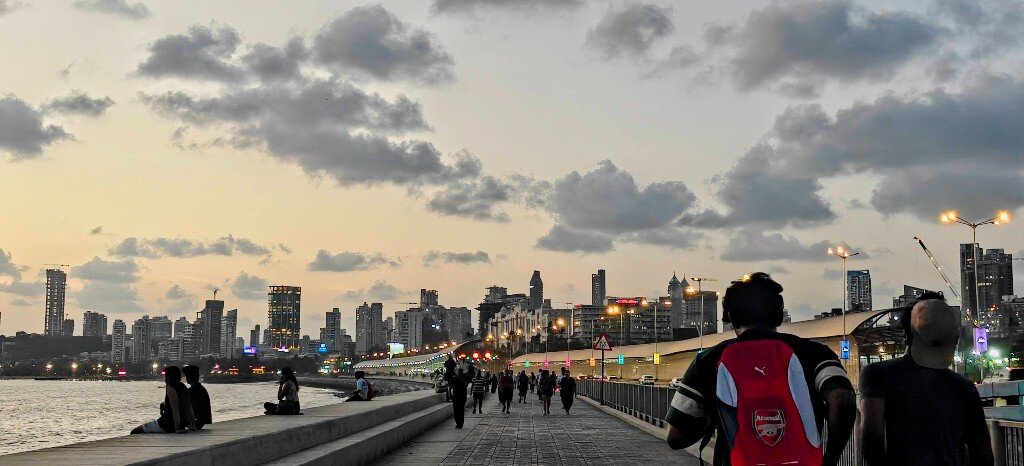
People out walking. The road runs beside the water, and the lights come on.
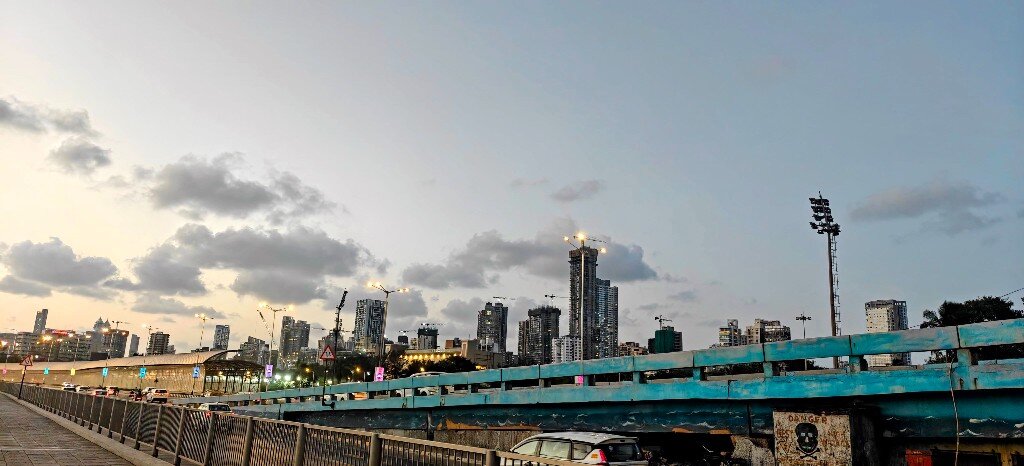
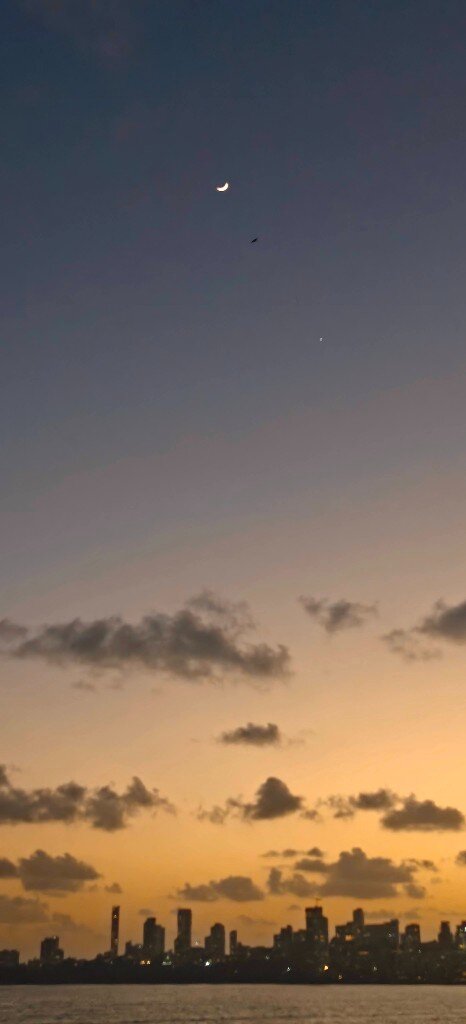
A moon over the towers.
Two people walking the edge of the water, and the city lit across the bay.
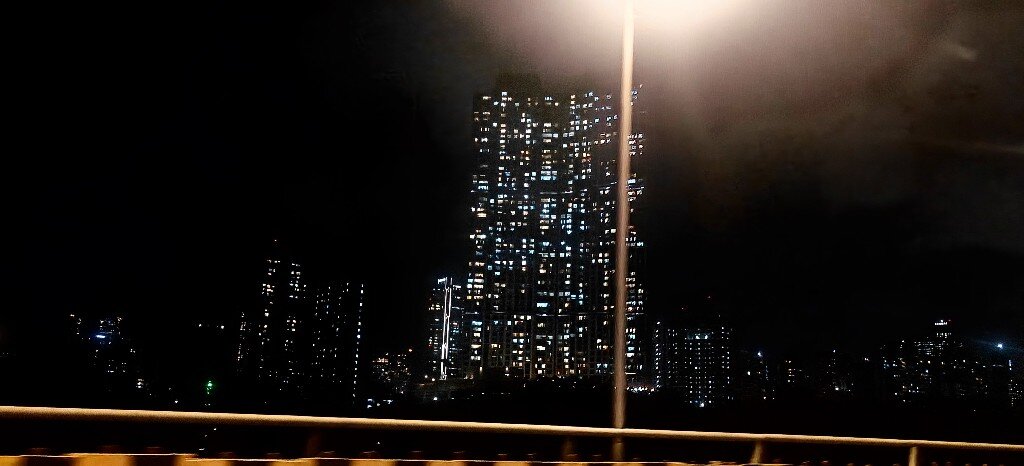
One tower, every window lit.
Juhu, after Kanheri
The next evening, after a day of basalt, caves, and forest, we went to Juhu. The sea was waiting at the other end of the day again.
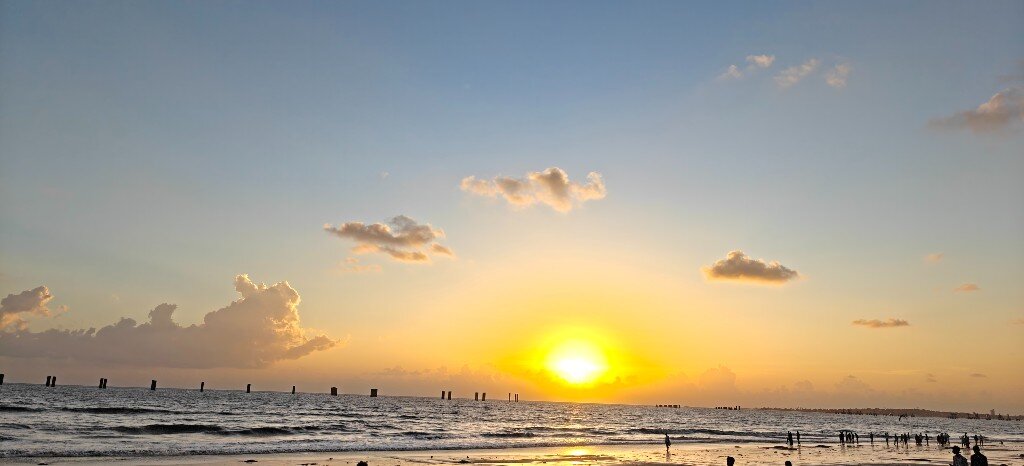
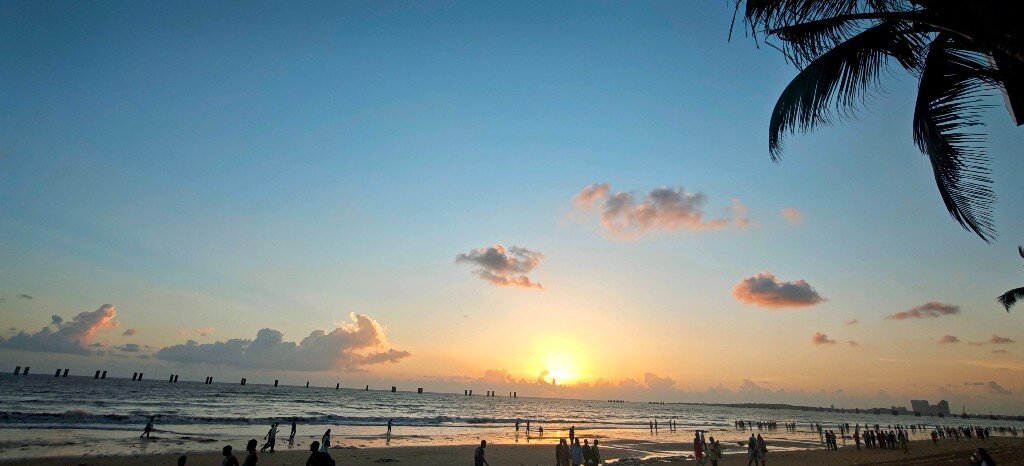
The beach is beautiful. The sun on the water, people standing in the shallows, a palm over the sand.
Then we looked down at the sand.
Plastic, cloth, a pile of it in a puddle. Someone walking past. The sunset was still there, people were still in the water, and this was the same beach. We were shocked.
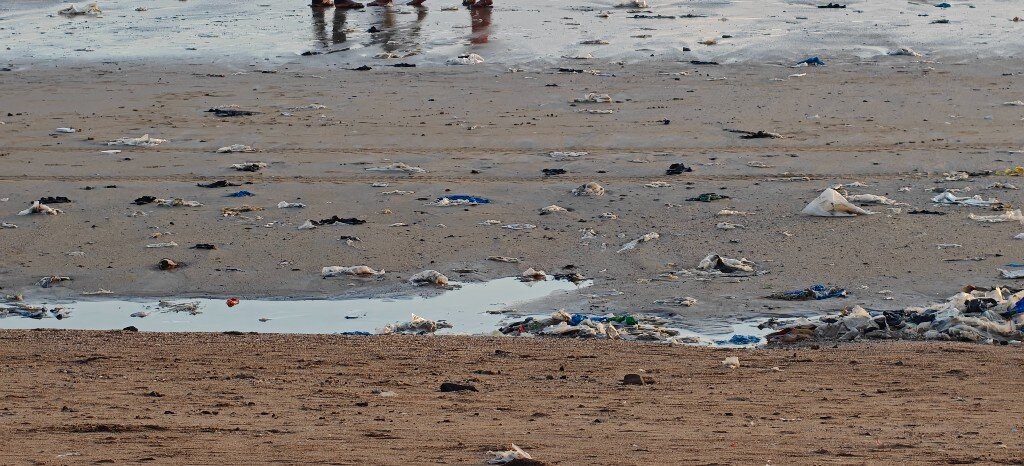
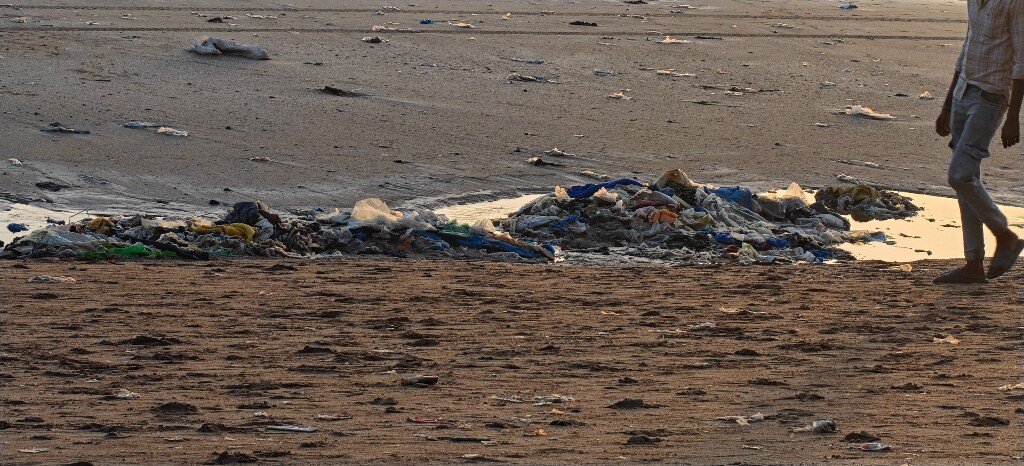
We read later what keeps happening here. Waste thrown into drains and nullahs goes out to sea, and high tides push it back onto the shore. Juhu gets the worst of it. After a week of heavy rain this monsoon, the BMC cleared more than 2,500 tonnes of plastic, thermocol, and clothes from Mumbai’s beaches. Juhu alone accounted for about 1,824 tonnes. The Indian Express wrote it up.
The next day, from the plane
From the plane, the separate pieces became one coast. Buildings packed to the water, the curve of the bay, ships out on the sea. Beautiful from up there. And we had just stood on the sand where the garbage comes back.
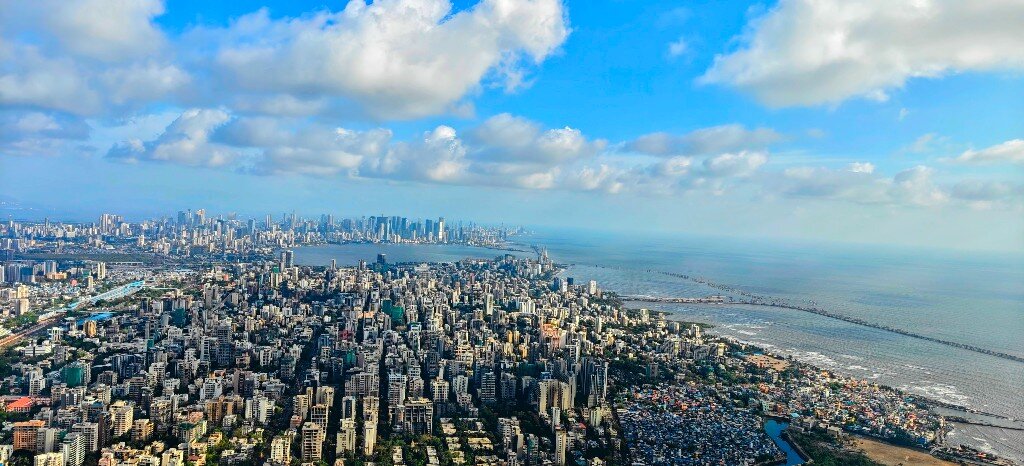
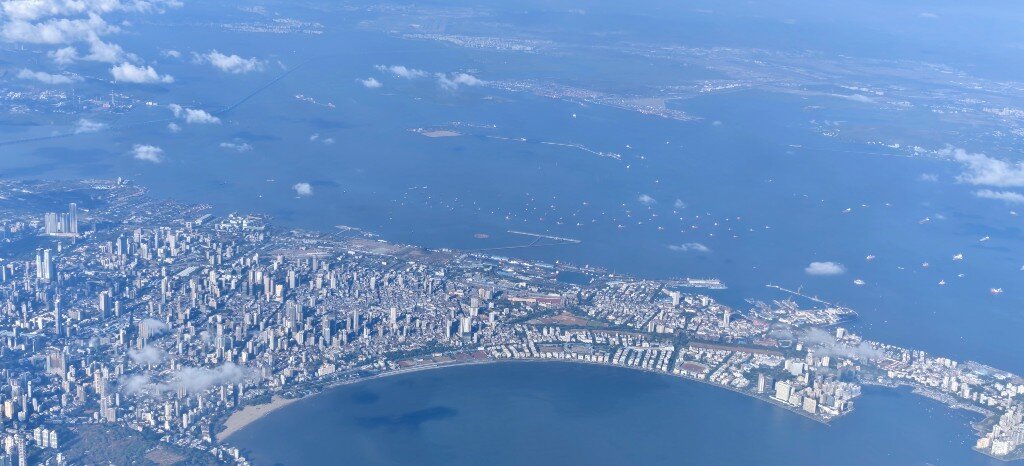
That is how this Mumbai journey ends for us: the skyline, the sunset, the beach, and what the tide leaves behind. The beautiful side and the shocking side belong to the same sea.